Offshore wind can fill the low-carbon gap left by the potential non-delivery of the delayed Hinkley Point C nuclear plant, according to Scottish Power Renewables.
SPR offshore wind director Jonathan Cole told today’s All-Energy conference in Glasgow that the offshore wind supply chain, projects, developers and funding were in place to plug any shortfall.
“I wouldn’t be gleeful if Hinkley Point C fails but offshore wind is a clean, green and reliable and can be built at scale,” he said.
“If there is a disturbance in the nuclear industry programme then offshore wind can step up to the plate. Offshore wind can be built at short notice as a very effective and cost-effective fall back solution.”
The 3.2GW HPC nuclear plant in Somerset was first slated to be online in 2017 but developers EDF has yet to start construction due to difficulties in raising the finance necessary for the £17bn project. If HPC goes ahead, first power is not expected until 2025 at the earliest.
Cole added even if HPC went ahead, a mid-2020s commissioning would be too late to meet the UK government’s objectives of security of supply.
Siemens energy strategy and government affairs director Matthew Knight said growing UK Cabinet unease about the uncertainty of Hinkley and the capacity margin was unhelpful for the renewables industry.
“The real danger is a kneejerk reaction of politicians to just do something,” he said.
“It may not be the best design and it may be expensive, but the shock it would cause would be hugely damaging to energy policy as a whole. The sooner it goes ahead the better.”
National Grid electricity network development manager Julian Leslie said the rapid increase in solar and wind deployment proved other generation sources could fill the void.
“There are other players with more capital to deploy quicker than nuclear,” he said.
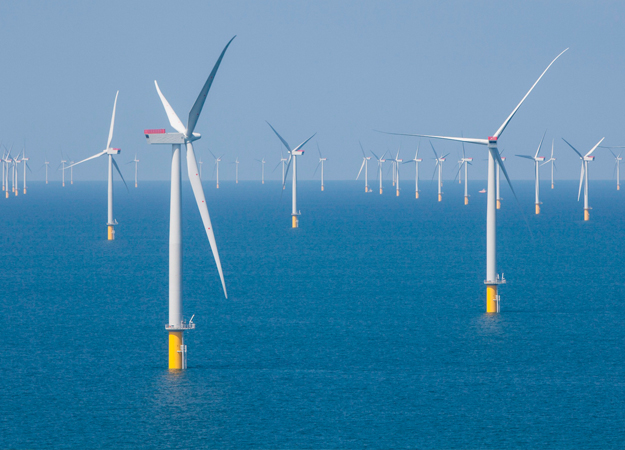
Image: Scottish Power’s West of Duddon Sands offshore wind farm (Scottish Power)
Offshore plug for nuclear gap
Supply chain in place to cover non-delivery of Hinkley Point, says SPR
 By EBS