


The delivery of the sustainable expansion of offshore wind and net gains for biodiversity has received a boost with a new international data collation exercise bringing together disparate seabed biodiversity data from across the North Sea into a central data set.
The North Sea Net Gain study, led by The Crown Estate in partnership with the Dutch-led Rich North Sea programme, aims to ensure that decisions on the next generation of offshore wind farms will be based on the most comprehensive information and will bring biodiversity net gain.
The project is funded by The Crown Estate’s £25m investment into its Offshore Wind Evidence and Change Programme, and by The Rich North Sea programme.
It is delivered through international collaboration between the UK government’s Centre for Environment, Fisheries and Aquaculture Science (Cefas) and Flemish marine research organisation The Flanders Marine Institute (VLIZ), and supported by a project advisory group which included members from Natural England and the Joint Nature Conservation Committee.
The study responds to an urgent need to improve understanding of the biodiversity of the seabed on a larger scale.
Through the adoption of a big data approach, development of big data infrastructure, and expansion of an existing dataset, the findings of the study have significantly enhanced understanding of the seabed.
Such approaches are likely to play a significant role in the sustainable development of offshore wind in the North Sea, the project participants said.
Data collected by industry, government and academic sources across seven countries have been brought together into a central data set containing almost 50,000 seabed samples with over 1.4 million records, and state-of-the-art modelling techniques used to map benthic biodiversity across international boundaries.
Two new online apps have been produced under the name ‘OneBenthic’.
The OneBenthic Data Extraction Tool provides developers, regulators and decision makers with access to the enhanced big data collected by the study.
In addition, the OneBenthic Layers Tool provides access to benthic biodiversity models developed under this and other research projects, at speed.
The enhanced data is already being used in other Offshore Wind Evidence and Change programme projects which will develop additional biodiversity knowledge, including Poseidon, a four-year project launched in January 2022 and led by Natural England, which will improve the knowledge of environmental risks across UK waters.
The projects will further enhance the understanding of the seabed and will be added to the OneBenthic Layers tool once complete.
International collaboration throughout this project has also supported enhanced flow of data between UK and European data repositories, widening the accessibility of seabed biodiversity data.
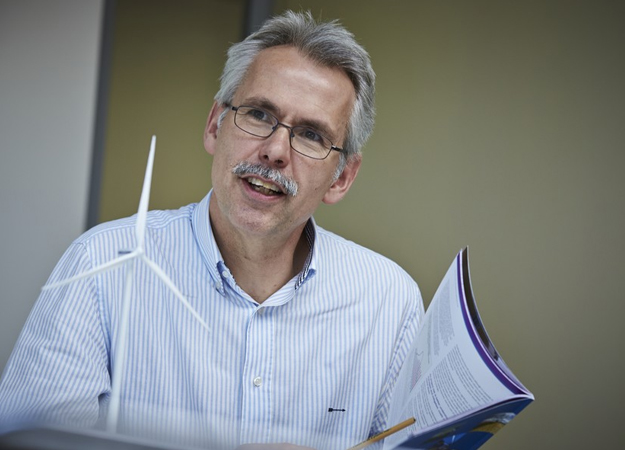
The Crown Estate managing director of marine Huub den Rooijen (pictured) said: “Offshore wind is set to play a pivotal role in decarbonisation and the UK’s transition to net zero – but delivering on that potential in the most sustainable way requires balanced and holistic consideration of the natural environment and other marine activities.
“This study, delivered through our Offshore Wind Evidence and Change programme, makes an important contribution to strengthening essential biodiversity data.
“It will be invaluable not just to the UK but across the world, helping to ensure the successful and sustainable expansion of new offshore wind farms in other locations.”
The Rich North Sea Programme director Erwin Coolen said: “We need to conserve, enhance and sustainably use our North Sea.
“The roll-out of offshore wind, which we need urgently to tackle climate change, must be within the ecological boundaries of our North Sea, meaning sustainable development that includes enhanced understanding of the conditions at site.
“Decision making on future offshore wind farms must be based on the most comprehensive information and deliver biodiversity net gain.
“Biodiversity is not influenced by borders and neither should we be. It is great to have collaborated and shared knowledge on an international level.”