


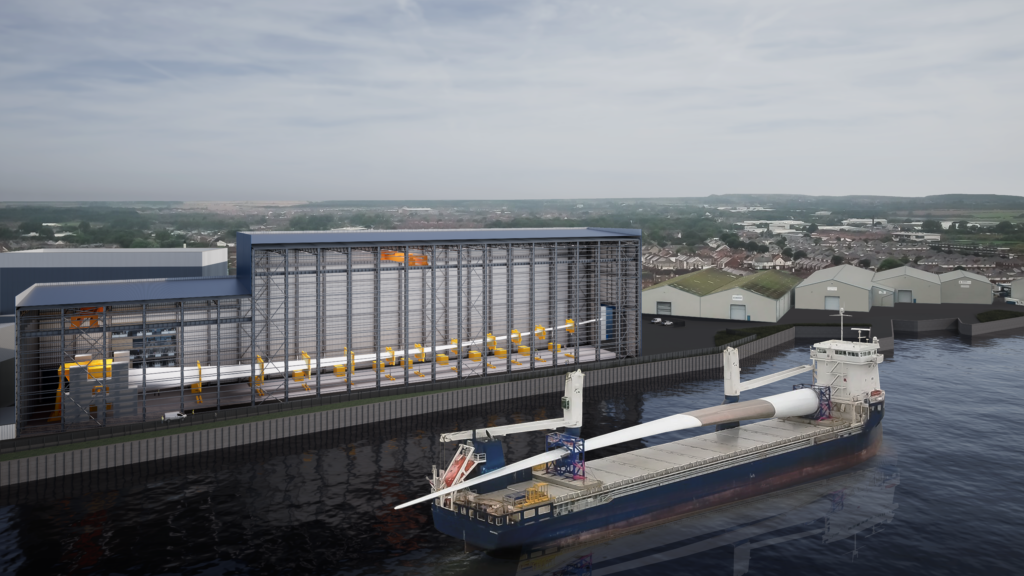
The Offshore Renewable Energy (ORE) Catapult has secured nearly £86m capital funding from UK Research and Innovation to enhance its turbine blade and drive train testing assets in Blyth, Northumberland.
The new and upgraded facilities, designed for the testing of blades up to 150 metres and drive trains up to 23MW, will ensure manufacturers can accelerate technology deployment with reduced risk and improved reliability for a “new wave of larger, more efficient machines”.
Provision will be made for a further expansion to 180 metres and 28MW respectively, to meet future industry demand.
Construction is expected to be complete by 2028. The research facilities will create 30 new jobs in Blyth and support five PhDs a year with the potential to support greater inward investment in the UK wind industry.
ORE Catapult estimates the investment will also prevent 2.5 million tonnes of CO2 by accelerating the development of new turbine models through test, validation and certification by a minimum of eight months.
Science, Innovation and Research Minister Andrew Griffith said: “Putting pioneering innovation at the heart of the UK’s transition to net zero is the key to protecting our environment in a way which continues to lift living standards.
“Our £86m funding will create highly skilled and highly paid new jobs that grow the north-east and wider UK economies while pulling investment in by marking our country as a leader on technologies of the future and unashamedly open for business.
“At the same time, it strengthens the UK’s energy security in an uncertain world and helps us pivot towards the cleaner energy that can preserve our planet for generations to come.”
ORE Catapult chief executive Andrew Jamieson added: “This investment in truly world-leading capability will keep the UK at the forefront of offshore wind technology development. It will enable ORE Catapult to continue to deliver the most advanced research and development infrastructure and expertise to the offshore wind industry, capturing the jobs and economic growth from the transition to a net zero economy.”