


Orsted has developed a new, ‘game-changing’ lower-noise installation method it says could potentially revolutionise the way offshore wind foundations are installed.
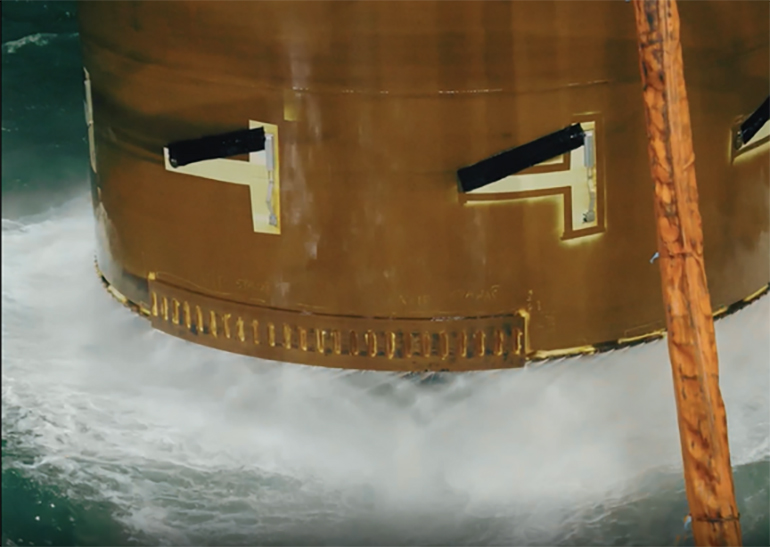
The new jetting technology has been successfully tested the 242MW Gode Wind 3 offshore wind farm in Germany, proving the approach can dramatically reduce noise levels during foundation installations, strengthening existing protections to marine life and potentially paving the way for the next generation of monopile foundations.
Orsted already uses a range of protective measures during offshore construction, including limiting the duration, intensity, or extent of certain offshore construction activities.
It also employs bubble curtains or other noise barriers during traditional installation. The new method allows the Danish developer to further reduce the potential impact from construction activities on the marine environment and build in a more cost-effective way.
Orsted has tested the new installation technique on three monopiles at Gode Wind 3.
The noise mitigation method involves a patented jetting technology attached to the base, which lowers the resistance of the surrounding sandy soil, effectively allowing the foundation to sink into the seabed –replacing conventional installation methods such as pile driving.
The use of the new installation technology has resulted in a substantial decrease in underwater noise levels: With a reduction of 34 decibels relative to the most commonly used method, and without additional mitigation, noise levels were reduced by over 99% to a level just marginally above the ambient noise found in the German Bight in the North Sea.
The developer said beyond the noise reduction, the new technology is a step change in offshore wind monopile installation that, once adopted at scale, can provide for more efficient and cost-effective installations of offshore wind foundations. 11MW turbines have already been installed on top of the foundations, and Gode Wind 3 is expected to start commercial operation later this year.
“Orsted has been at the forefront of offshore wind innovation and marine protections for 30 years, and we continue to push the envelope on new innovative solutions,” said the company’s executive vice president and chief operating officer Patrick Harnett.
He added: “This new technology is a potential game-changer for how we build offshore wind.
“Once industrialised, it could not only be cheaper, faster, and far quieter – without additional mitigation – than any other monopile installation technology, it also has the potential to make next-generation foundations lighter as they won’t need to be designed for conventional installation process.”
This is the first time a jetting technology has been used to install full-size monopile foundations. The developer carried out the installation together with Jan De Nul Group and its installation vessel Les Alizés as well as contractor Aarsleff.
Orsted has been developing the technology over the past years and is now looking into how to introduce the technology into the future pipeline, which includes assessing the feasibility of the method on more complex ground conditions than the pure sand conditions found at the Gode Wind 3 site.
Further regulatory approvals will also be needed before the technology can be implemented in other markets globally.