


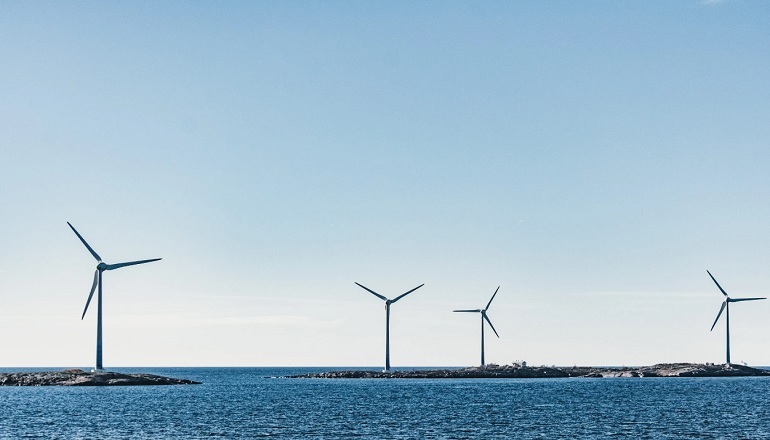
Ramboll has been selected to provide a pre-front end engineering and design (FEED) study for a wind project off the coast of Estonia.
The study, due to complete by January 2023, will confirm the technical and economic feasibility of the Saare-Liivi offshore wind project and will identify the most suitable wind turbines, foundation types, logistic solutions, port logistics and other technical solutions.
The 1200MW of the first stage of Saare-Liivi offshore wind farm would cover nearly 60% of Estonia’s annual electricity consumption.
The study, for developer Utilitas Wind, will support the environmental impact assessment process by providing input and solutions that would mitigate potential environmental impacts.
“As the first year of environmental studies will soon be completed, it is the right moment to move forward with the development of technical solutions and identify the most optimal wind turbine generators and foundation types for the offshore wind farm, taking into account the preliminary information from the environmental studies,” said Liisa Mällo, Offshore Wind Development Manager at Utilitas Wind.
At the beginning of September, at the request of Utilitas Wind, pre-construction works were carried out over the entire area of the Saare-Liivi offshore wind farm.
During the study sediment types and structures were identified.
“We are very excited to support Utilitas with this important project.
“At Ramboll, we have experience working on complex offshore wind projects in over 20 countries worldwide and we are very proud to provide expert services for the pre-FEED phase of the project.
“Saare-Liivi offshore wind park will play a key role in supplying green energy to Estonia and increase energy security in the region”, said Tim Fischer, Global Senior Director of Wind at Ramboll.
In addition to the wind farm’s technical solutions, Ramboll will also propose a concept regarding the electrical solution, including the location and technical parameters of the cables, as well as the location and size of the substations, for the wind farm.
Ports will also play an essential role in developing the offshore wind farm, thus the logistics of construction will be analysed, as well as the possible alternatives for the construction and operation, and maintenance of ports.
Suitable areas for offshore wind farms in the Gulf of Riga were defined in the regional plan for the maritime area bordering Pärnu County, adopted in 2017.
The CPTRA initiated the building permit procedure for Utilitas Wind’s Saare-Liivi offshore wind farm at the end of 2021.
Utilitas Wind aims to obtain the necessary permits for construction in 2025, and by 2028 at the latest, the Saare-Liivi offshore wind farm could enter production.