


Scotland will need six new offshore wind manufacturing facilities to deliver a 60 per cent UK local content target, a report by the Scottish Offshore Wind Energy Council (SOWEC) shows.
The report states that while Scottish content in Scottish projects currently stands at 44 per cent, content from Scottish-based companies in non-Scottish projects in the rest of the UK is less than one percent.
The report has been published to lay out the required strategy for an increase in the amount of work Scottish and UK businesses win from offshore wind.
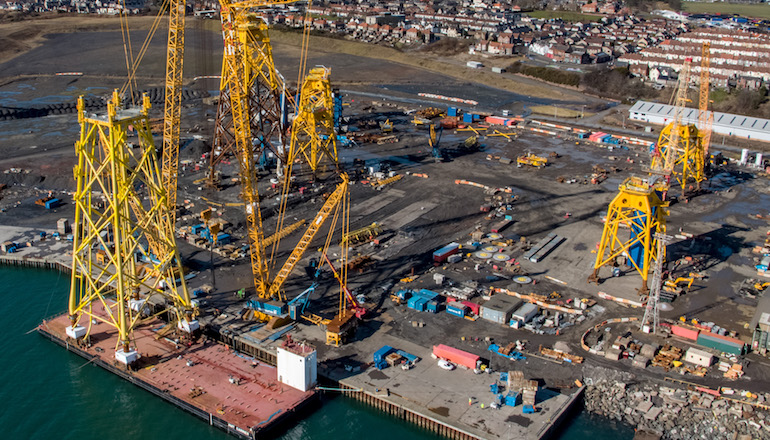
It recommends a strategy focused on manufacturing rather than installation, and identifies towers, blades, and floating offshore wind platforms as the most promising inward investment opportunities for Scotland.
Modelling by BVG Associates also highlights that future floating offshore wind projects are likely to deliver higher levels of UK and Scottish content than fixed offshore wind projects, due to the increased likelihood of platform manufacture in Scotland, the opportunity to supply mooring systems from Scotland and because more of the turbine installation work is undertaken onshore, meaning that existing expertise from the onshore market can be used.
The report estimates that 15 new manufacturing facilities would be needed to deliver 60% UK content, six of which could be in Scotland.
However, it also highlights that there are no compelling reasons for suppliers to choose to manufacture in Scotland compared to other UK locations.
The UK’s Offshore Wind Sector Deal, agreed between the UK Government and the offshore wind sector, has a commitment to grow UK content of offshore wind to 60%. To deliver this 60% UK content will require significant investment.
Neil Douglas, Director of BVG Associates, said: “ScotWind and other upcoming leasing rounds represent a huge opportunity for the Scottish supply chain.
“These leasing rounds can provide a catalyst for Scotland to grow an industry to meet local and global needs. Increasing the local share of offshore wind projects will deliver economic, social and environmental benefits for Scotland. More local content will also increase offshore wind’s appeal to investors, governments and citizens.
“Having worked with the Scottish supply chain for over a decade, we are delighted to support SOWEC to help make the most of these opportunities.”
Alongside the report, SOWEC is also releasing a Stakeholder Map of organisations involved in offshore wind. The aim of this map is to provide information to help businesses understand who the stakeholders are and how they fit together, helping businesses know who to engage with, what for, and when.
SOWEC industry co-chair Brian McFarlane said: “For the first time, we have a baseline to grow from. SOWEC is committed to growing Scottish jobs from offshore wind, so knowing where we are starting from and having a clear route map is vital. This report, alongside the recent Scottish Infrastructure Assessment, will help SOWEC to prioritise actions to grow jobs in Scotland from offshore wind.”
Ends