


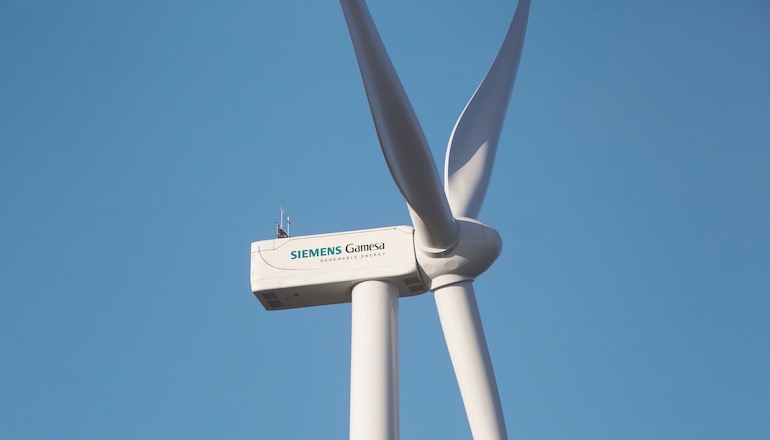
Siemens Gamesa is to redesign all its turbines to ensure a 100% recyclable machine is marketed by 2040 and fully recyclable blades by 2030.
Most of the components of a turbine can already be recycled today, but blades, specifically, do represent a challenge due to the materials used and their complex composition.
Siemens Gamesa said it promotes the creation of a circular economy by identifying opportunities for large-scale product recycling, making turbine materials more sustainable and improving both waste and resource efficiency.
To this end, this step marks a milestone towards a fully recyclable wind turbine value chain, the company said.
The move forms part of its Sustainability Vision towards 2040 to ensure its contribution has the most significant impact on the future.
Siemens Gamesa chief executive Andreas Nauen said: “At the heart of everything we do is a deep desire to improve our world through the provision of clean energy that will help to decarbonise the energy supply and tackle the threat of climate change.
“That purpose doesn’t just end with the provision of wind energy, however, and we are determined to take action across all our activities that will have a positive effect on the environment, our company, and society.
“Pushing the boundaries of sustainability is an important pledge to lead change now but also for the generations to come.”
Among the numerous projects and initiatives, the plan outlines a way to help achieve a decarbonized economy with the goal of reaching net-zero emissions by 2040, including emissions produced by the company’s whole value chain.
Previously, the net-zero target was 2050.
To this end, the company will pursue opportunities to achieve a carbon intensity rate of zero-emissions per MW installed without any offset compensation measures.
Some of the main actions will be replacing all new and existing heating and cooling systems with zero carbon alternatives, and self-generation in the wind farms and factories.