


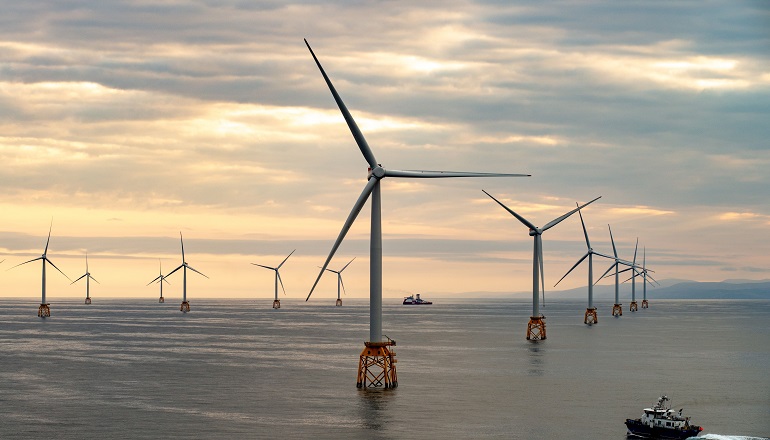
SSE Renewables has called on the Irish Government to increase its 2030 installed offshore wind energy target to more than 5GW.
The developer said this was necessary to help address the climate crisis and protect Ireland from the ongoing geopolitical threats to energy security in Europe.
Speaking at the Irish Renewable Energy Summit in Dublin, SSE’s director of development Maria Ryan said: “Offshore wind will be key to addressing the climate crisis, while also protecting Ireland from the geopolitical threats that are ongoing in Europe.
“It will reduce dependencies on fossil fuels and help protect energy consumers from rising wholesale gas prices.
“Meeting the current 5GW target of installed offshore wind energy in Irish waters by 2030 is absolutely critical.
“However, Ireland needs to challenge itself to do more, and we shouldn’t settle for the current 5GW target by the end of the decade.
“Instead, we should see this target as the absolute minimum requirement needed to tackle climate change and secure Ireland’s indigenous energy requirements.
“As a result, we encourage the Government to aim to deliver at least 5GW of offshore wind by 2030.”
SSE Renewables is actively working to deliver three offshore wind projects before the end of the decade.
These include Arklow Bank Wind Park 2 off Co. Wicklow which will be among Ireland’s Phase 1 of projects to be delivered, as well as Phase 2 projects Braymore Wind Park off the Meath/Louth border and the Celtic Sea Array off Waterford Estuary.
Together, the three projects would have a combined installed generation capacity of around 2GW, enough to power over 2 million homes and offset almost two billion kilos of carbon annually.
Ryan said 2021 was a notable year for the offshore wind sector in Ireland with the passing of the Maritime Area Planning (MAP) bill through all stages of the Oireachtas but called for momentum to be maintained to ensure Phase 1 projects, the first batch of offshore wind energy projects currently in development in the Irish Sea, can be delivered on target.
She said: “With the MAP legislation now enacted we need to see the same level of purpose and enthusiasm ploughed into the establishment of the Maritime Area Regulatory Authority (MARA) over this year and next, into the issuing of grid offers for Phase 1 projects, and into kicking off the first Offshore Renewable Electricity Support Scheme (ORESS) so we can begin getting offshore wind turbines in Irish waters.
“The establishment of MARA is also crucial for the delivery of the following generation of offshore wind projects as, until that body is established, Phase 2 offshore wind projects cannot secure seabed.
“So we must see political will and sufficiently-resourced administrative action more greatly aligned on the important goal of delivery.”