


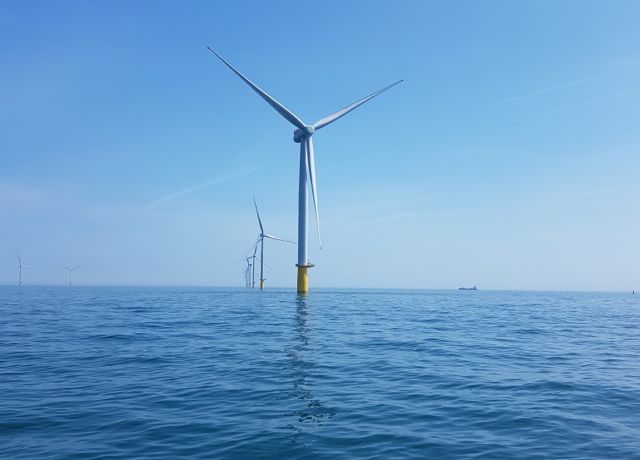
Australian offshore wind project Star of the South has initiated a wind measurement campaign at the site, off the coast of Victoria.
The up to 2GW project, situated south of the coast of Gippsland, has begun deploying wind and wave monitoring equipment from Port Welshpool to collect data on the wind profile and conditions in the Bass Strait.
Two floating Lidar devices and a wave buoy have been installed out at sea and will collect data for several years.
Wind and wave contractor Akrocean shipped the equipment to Australia from Europe last month, with support from local supplier TEK-Ocean, which is assisting with equipment installation and ongoing maintenance works.
Local Gippsland workers are amongst the first in Australia to be trained to service the wind and wave monitoring equipment while it is out at sea.
In 2020 Star of the South will also start soil testing to collect data on seabed conditions at the site, which will help confirm the project’s feasibility and inform early planning, along with other investigations that include studies to confirm sea depths and conditions, as well as baseline environmental surveys for marine life and birds.
Recently Casper Frost Thorhauge joined Star of the South as the project’s new chief executive.
Offshore wind projects Thorhauge has led include the 900MW Greater Changhua 1&2a offshore wind farm projects off the coast of Taiwan.
When built by 2027 Star of the South will potentially be the biggest offshore wind project in the southern hemisphere and could supply around 18% of the state’s electricity needs.
Thorhauge said “I’m excited to work on Australia’s first proposed offshore wind project, the Star of the South. “This project has the potential to power hundreds of thousands of Victorian homes, providing a reliable and consistent source of energy, while creating jobs and investment for Gippsland.
“The Star of the South is ramping up with site investigations starting to collect valuable data to inform early project planning.
“We’re pleased to be supporting local Gippsland workers during this early development phase and look forward to more opportunities to invest in the region as we continue our studies.”