


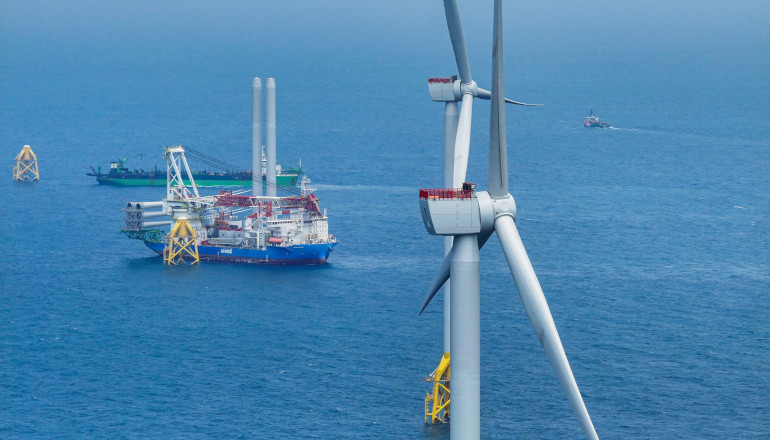
Taiwan’s offshore wind sector faces growing financing challenges that risk slowing deployment, raising costs and undermining climate targets, a Carbon Trust report said.
The Carbon Trust said financing constraints have become the main barrier to expansion as the market shifts from early deployment to large-scale growth, despite Taiwan reaching 4.4GW of installed capacity by the end of 2025.
It added that these challenges are driven largely by policy gaps, including revenue uncertainty following the move away from feed-in tariffs and reliance on corporate power purchase agreements.
Taiwan ranked fifth globally in cumulative offshore wind capacity in 2024 and second for new installations, highlighting the sector’s rapid development.
However, the report warned that a narrow CPPA market dominated by a small number of creditworthy buyers is increasing financing risk and limiting scalability.
Limited domestic project finance capacity and policy complexity linked to procurement rules, localisation requirements and permitting were also identified as key constraints.
“This report finds that financing challenges rather than lack of interest or resources now pose a significant risk to the pace, cost and scale of offshore wind deployment in Taiwan,” said Carbon Trust.
The Carbon Trust noted that these factors reinforce each other, with uncertain revenues raising financing costs and increasing reliance on international lenders.
It emphasised the need for long-term direction setting, arguing that clearer policy frameworks and risk allocation are required to support a mature offshore wind market.
The report said government should play a greater role in managing policy and revenue risk, while financial institutions, developers and insurers take on market, construction and operational risks.