


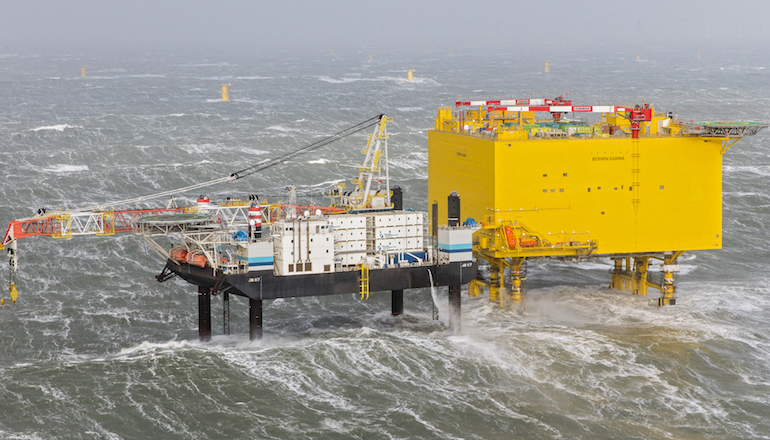
TenneT has confirmed it has grid connected over 7GW of German North Sea offshore wind, exceeding a Berlin target for 6.5GW by 2020.
Some 12 grid connection systems are running in the German North Sea facilitating the connection of multiple wind farms totalling 7.1GW.
TenneT also revealed that it reached a new output peak in 2019 with some 20.21 terawatt hours of offshore wind fed to the grid, up some 21% on the previous high water mark.
“We are pleased that we have already achieved the goal set by the Federal Government ahead of time,” said TenneT Managing Director Tim Meyerjürgens,
TenneT is current working on three more grid connection that will increase capacity from the North Sea to 10GW by 2025.
“We are pushing ahead with grid expansion on land just as consistently, because this holistic approach is the key to a successful energy transition,” added Meyerjürgens.
“We also successfully put our first offshore grid connection into operation in the Netherlands in 2019, by 2023 we will expand the connected load there to 3,500 megawatts. In addition, we are advancing our ‘green projects’ and innovations in order to achieve the climate targets we are aiming for in Germany and Europe.”
TenneT is also pressing ahead with the North Sea Wind Power Hubs, which could open up to 180GW of offshore wind energy by 2045 and connect the networks of the states bordering on the North Sea.
“With our European partners, we are pursuing a modular, step-by-step approach, which will later include a combination with power-to-gas systems. This is not science fiction: A first distribution cross with a capacity of 10 to 15 gigawatts could go into operation in the early 2030s,” said Meyerjürgens.