


TenneT has completed the cable burial works for the 700MW Hollandse Kust West offshore wind farm in the seabed off the coast of Velsen-Noord.
The works have involved the burial of 3.5km of TenneT’s second sea cable for the project.
After migration under dunes, the electricity cable was laid eight metres deep in the beach and in the seabed by the BSSIII burial machine.
“We expect to be able to return the beach cleared and safely at the end of July,” said project manager Robert Koens said on behalf of TenneT.
As with the first cable, contractor NBOS is now connecting the end of the second cable to the remaining part at sea with a sleeve connection.
This part is laid by installation ship Ndurance and then buried in deeper water with the burial ship Ndeavor and the CBT 2400 burial machine.
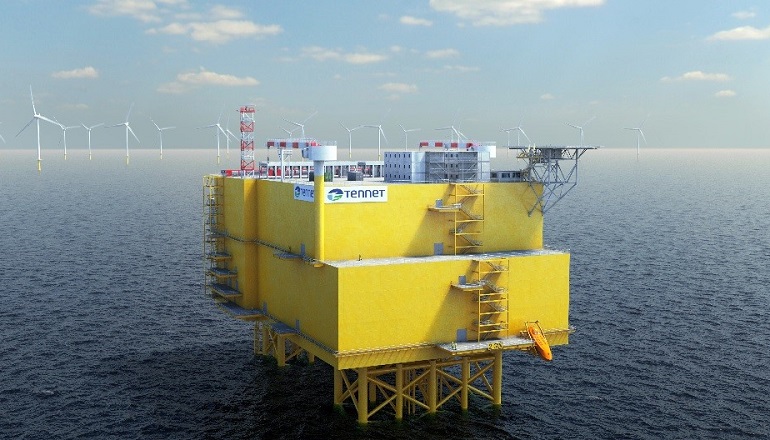
This extends to the 700MW socket that TenneT is having built 53 km off the coast of Egmond aan Zee.
Koens said: “The weather has not really been ideal in recent weeks, but when a favorable work window opened up a few days ago, the execution really went smoothly.
“A compliment to our contractor NBOS, which completed the job quickly over the past five days.”
“Both cables are part of the connection with which TenneT will connect the Hollandse Kust (west Beta) offshore wind farm to the national electricity grid in the coming years.
“The base for the socket was recently successfully placed on the seabed and the ready-made superstructure will be installed on it in the spring of 2025.
“After an extensive test series, the connection will be ready for use next year and wind farm operator RWE/OranjeWind can then connect its wind turbines to it.”
The cables are connected behind the dunes to the electricity cables on land, so that the electricity ends up at the transformer station in Wijk aan Zee.
There the voltage is increased to 380kV.