


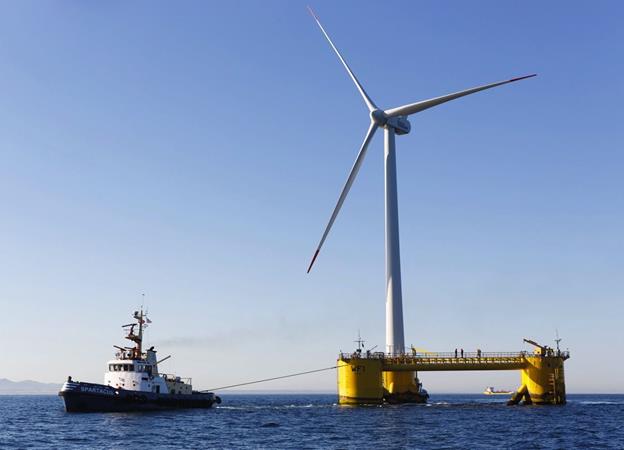
New research as warned that the tow-to-port method for heavy maintenance at commercial-scale floating wind projects may no longer be feasible.
The World Forum Offshore Wind (WFO) explored alternatives to the current model.
According to its Onsite Major Component Replacement Technologies for Floating Offshore Wind white paper, new equipment and approaches will be needed as turbines get bigger further from shore.
It warned that, given available technology, tow-to-port may no longer be a feasible approach for heavy maintenance at certain commercial-scale floating wind projects.
The method requires long, suitable weather windows as well as major component replacement capabilities at O&M ports, which may not be available.
In addition, conventional jackups may no longer be feasible for some floating wind farms due to the deeper waters they operate in.
These contribute to increased O&M costs for floating wind projects and increased downtime.
The paper notes that floating-to-floating solutions, or alternative technologies such as add-on cranes and vessel cranes, have the potential to reduce repair time and downtime as well as eliminate the need for disconnection of the FOWT.
Add-on cranes can be attached to the floating wind platform or turbine itself, while vessel cranes are attached to floating vessels working close to the platform.
However, the technology track record, cost and overarching floating wind market uncertainties are key challenges for new technologies to reach the market in the next decade.