


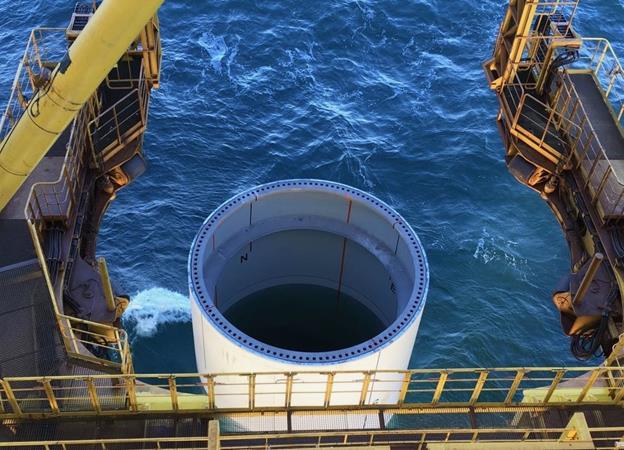
Research papers from the Carbon Trust’s £3m-plus joint industry Pile Soil Analysis (PISA) project have been made available for free online.
Academic articles written during the project, which aimed at reducing the cost of monopile foundations, have been published open-access in the journal Géotechnique.
“The release of the PISA papers by Géotechnique, one of the most prestigious geotechnical journals, is another important milestone for this successful joint industry project,” PISA technical manager Miguel Pacheco said.
“The use of the PISA methodology represents a major paradigm shift in offshore geotechnical design. Not only has it led to significant steel savings for monopile foundations, but the use of PISA allows greater confidence in our design calculations.”
PISA research has created new design methodologies that reduced steel requirements of tubulars by up to 30 percent.
One of the key findings from the project – which field tested new concepts in France and England – showed that clay seabeds provide more support to foundations than previously thought.
“We believe these new methodologies will have a significant impact on the way industry understands the interaction between soil conditions and monopile foundations. It is the culmination of many years of collaborative work between industry and academia,” said Carbon Trust director Jan Matthiesen explained.
Previous estimates for the behaviour of wind turbine foundations were based on offshore oil and gas platform designs, where piles are typically smaller in diameter, longer and must resist different operational loads.
Findings from the PISA project have already been implemented by developers – Orsted adopted findings into a new design methodology for the 174 wind turbine foundations at its 1.2GW Hornsea 1 project off Yorkshire.