


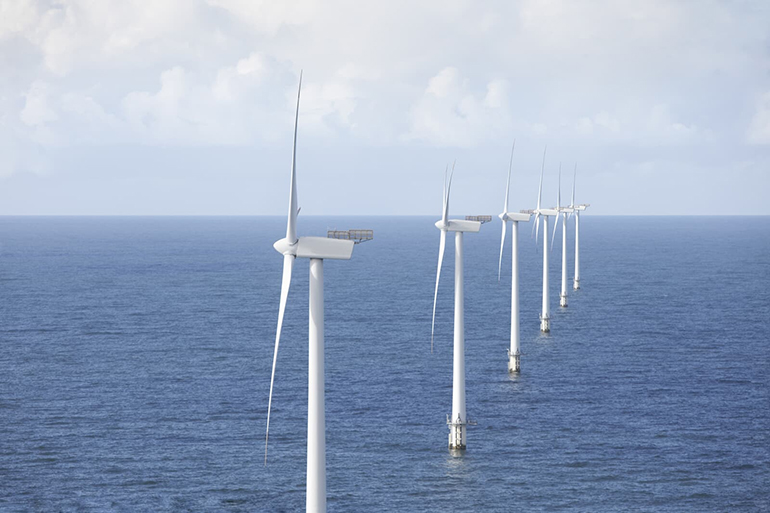
Global technology firm ABB estimates that a further 24 wind farms with an average capacity of 1500MW each need to become operational during the next seven years to hit the UK’s 50GW 2030 offshore wind goal.
If achieved, the UK’s electricity supply from offshore wind will jump from 18% to 62% delivering renewable energy to every UK household, approximately 29.98m homes, with a surplus available to export and power a further 37m homes in neighboring countries. Offshore wind currently powers 15.28m UK homes annually.
To mark Global Wind Day 2023, ABB – which has over 40 years’ experience in the offshore wind sector and is the largest supplier of electrical components to the wind industry around the world – is highlighting the measures needed to achieve the 265% increase.
“In order to reach the UK’s ambitious targets, we must collectively find ways to bring down the cost of developing new wind farms, speed up the planning and permitting processes, secure the supply chain and deliver network infrastructure upgrades to support the massive growth in power flows and connections to the grid,” said Per Head of ABB Energy Industries for Northern Europe Erik Holsten.
“If we get this right, we could help the UK resolve the current energy pricing crisis and significantly grow the UK’s export capability, all the while delivering a cleaner form of electricity to industry and consumers.”
ABB is actively involved in seven key offshore projects across the UK. Collectively they represent 9GW of offshore wind power capacity and include the world’s largest wind farm at Dogger Bank, located more than 130km off the north-east coast of England.
ABB’s technology and engineering solutions act as a gateway that unlocks the offshore wind process, allowing the electricity generated by wind turbines to flow to the national grid and into peoples’ homes. The company’s automation and electrification solutions drive down the cost of wind operations, optimise production and minimise energy losses as well as ensuring safe, reliable integration of power.
Electricity generated from wind currently accounts for almost a third (32.4%) of the UK’s total electricity generation, having outpaced gas for the first time ever during the first quarter of 2023. As one of the most cost-effective sources of energy, it is presently more than 50% cheaper than electricity produced from gas. Furthermore, by 2030, the UK’s offshore wind sector is set to support more than 66,000 additional jobs.
At the end of March, the UK government announced a net zero plan called Powering Up Britain. This series of policy pledges includes accelerating the deployment of offshore wind in order to boost the country’s energy security, reduce household bills, and maintain a world-leading position in achieving net zero. It also features £160m in funding to kick start the infrastructure investment needed to deliver the increase in floating offshore wind farms.