


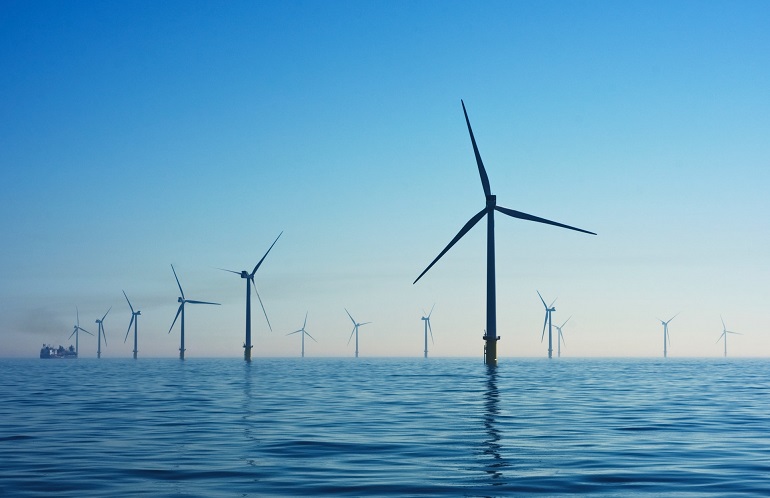
The UK’s offshore industry can boost turbine installations threefold to help reach net zero, but planning must be made easier, according to Offshore Energies UK (OEUK).
The UK’s new government must double or even triple the rate of offshore wind turbine installations to meet its target of a fourfold increase in offshore renewable energy by 2030, OEUK’s new report highlighted.
The study, due for publication on 7 September, has found that nearly half the offshore wind projects needed to reach the government’s 2030 target are only at concept stage.
Such projects typically take 13-plus years to move from concept to operation, many far longer, largely due to delays in government planning and approval processes.
It means the UK is at risk of missing the target unless installations accelerate, OEUK stated.
These and other findings are included in OEUK’s Economic Report 2022: A Focus on UK Energy Security, due for publication on 7 September.
The UK already has the world’s second largest installed offshore wind capacity, at around 12GW. The strategy aims to increase it to 50GW by 2030, of which at least a tenth is to take the form of floating wind farms.
Expanding offshore wind would also give the UK more control over its own energy sources – cutting import bills, boosting energy security, and reducing the risk of energy shortages and rationing during future crises.
The challenge of such an expansion means the UK will need to install an estimated 3200 new, and much larger, wind turbines by 2030 – roughly three new turbines every two days, OEUK found.
Ross Dornan, lead author of OEUK’s Economic Report, said: “As of late August, OEUK knew of around 40 projects planned through to 2030 at various stages of the development cycle. Based on this pipeline, the Energy Security Strategy target is potentially achievable, but it is important to understand the associated project uncertainties and risks.”
OEUK’s Economic Report will call on the UK’s new government to implement four key measures from its Energy Security Strategy to boost the rate of offshore wind installations: cut planning consent times from four years to one, streamline the Environmental Assessment process, cut red tape using the government’s Offshore Wind Acceleration Task Force and create a fast-track planning process for non-controversial projects
Dornan said that the UK’s offshore industry could achieve many of the government’s targets – but only if those changes were introduced fast. “Our sector is showing how its vital skills and expertise can drive the low-carbon energy and emissions solutions needed for the future.
“We’re seeing that in action in the North Sea, through the start-up of power generation at the Seagreen offshore wind project and the beginning of construction of the Dogger Bank project – two of the world’s largest offshore wind farms which are both being led by companies with an oil and gas production heritage.”