

Close Menu
reNEWSreNEWS
  • Home
  • Offshore Wind
  • Onshore Wind
  • Solar
  • Other News
    • Energy Storage
    • Finance
    • Grid
    • People
    • reMIX
  • More
    • Company Profiles
    • Events
    • National Wind Energy Awards 2026
Latest News

PODCAST: Is UK offshore wind back on track?

All-Energy 2026: Shanks bullish on UK clean power

GWEC, TÜREB launch wind partnership

LinkedIn Facebook X (Twitter)
  • Email Briefings
  • About
  • Advertise
  • Contact
reNEWSreNEWS
  • Home
  • Offshore Wind

    PODCAST: Is UK offshore wind back on track?

    May 13, 2026

    UK offshore wind pipeline reaches 93GW

    May 13, 2026

    Seaway7 completes Hai Long cable works

    May 13, 2026

    DEME names new jack-up vessel

    May 13, 2026

    Mubadala invests $325m into Hornsea 3

    May 13, 2026
  • Onshore Wind

    ENERCON to build Türkiye blade plant

    May 13, 2026

    ‘Fatality at South Korean wind farm’

    May 13, 2026

    Scottish onshore wind forum launches

    May 12, 2026

    ENOVA starts 30MW Hiddels repowering

    May 12, 2026

    Iberdrola buys 40MW Italian wind farm

    May 12, 2026
  • Solar

    VSB secures Sicily PV project approval

    May 13, 2026

    Matrix connects two Spanish renewable projects

    May 13, 2026

    Qualitas targets €10bn energy investments

    May 12, 2026

    Consultation opens for 49.9MW Barrons Solar

    May 12, 2026

    Great North Road solar nears decision

    May 11, 2026
  • Other News
    • Energy Storage
    • Finance
    • Grid
    • People
    • reMIX
  • More
    • Company Profiles
    • Events
    • National Wind Energy Awards 2026
LinkedIn Facebook X (Twitter)
reNEWSreNEWS
Home » Uncategorized » Uniform turbine layout touted for NE US offshore wind
Offshore Wind

Uniform turbine layout touted for NE US offshore wind

SaraBy SaraNovember 19, 20194 Mins Read
Hornsea 2 prizes for EEW

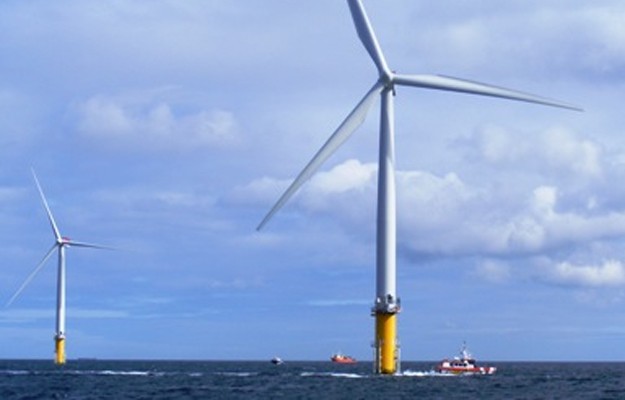
Equinor, Mayflower Wind, Orsted-Eversource and Vineyard Wind have submitted a uniform turbine layout proposal to the US Coast Guard (USCG) for all projects being developed within their New England lease areas.

The developers have proposed one nautical mile spacing between wind turbines in projects, which are being developed off states that include Massachusetts, Connecticut and Rhode Island.

Advertisement

The companies issued the following joint statement: “In response to feedback from key stakeholders, we have proposed to adopt a uniform turbine layout across our adjacent New England lease areas.

“This uniform layout has subsequently been proposed to the USCG for its review.”

According to the developers, the uniform layout is consistent with the requests of the region’s fisheries industry and other maritime users.

The proposed layout specifies that turbines will be spaced one nautical mile apart, arranged in east-west rows and north-south columns, with the rows and columns continuous across all New England lease areas.

In addition, independent expert analysis provided to the USCG confirmed that this uniform layout would provide for “robust navigational safety and search and rescue capability” by providing hundreds of transit corridors to accommodate the region’s vessel traffic.

“We look forward to continuing to work with the USCG, the Bureau of Ocean Energy Management, coastal states, the fisheries industry, and other stakeholders involved to ensure continued coexistence of every ocean user in the region, including offshore wind,” the developers added in their joint statement.

The 800MW Vineyard Wind 1 project already submitted a 1×1 nautical mile layout which has been analysed in BOEM’s draft environmental impact study for the project.

According to the developers, a uniform layout reflects considerable written and oral public comments from New England maritime stakeholders and will allow mariners to safely transit from one end of the New England wind energy area to the other without unexpected obstacles.

The five New England offshore wind leaseholders’ proposal to the USCG addresses four principal concerns.

The first is navigation safety, the second is the fisheries community’s request for uniform and consistent spacing between turbines throughout the New England wind energy are.

The third is creation of “distinct” transit corridors and the fourth is the facilitation of search and rescue operations conducted by both vessel and aircraft.

The New England offshore wind leaseholders also submitted a report prepared by WF Baird & Associates USCG that analyses the uniform layout using international vessel safety guidelines. WF Baird & Associates is a vessel and port safety consultant and the analysis was based on automatic identification system (AIS) data between 2017 and 2018.

A key finding in the report suggests that most traffic in the general region is transiting around, or along the outside edges, of the New England wind energy area.

It also found that most of the transiting vessels are fishing vessels, and they follow a wide range of transit paths through the New England wind energy area, as they are coming from several different ports and heading to a variety of fishing grounds.

The report states: “The uniform turbine layout would create 231 corridors of uniform width that cross from east-west (E-W), north-south (N-S), NW-SE, and SW-NE. These 231 corridors will be available for mariners no matter where they cross into the New England wind energy area.

“The corridor width in the E-W and N-S direction would be one nautical mile. In the NW-SE and SW-NE directions the corridors would be 0.7 nautical mile-wide for the purpose of maintaining a constant heading, however the closest distance between any two turbines on either side of a vessel using a NW-SE or SW-NE corridor would be 1.4 nautical miles.”

The developers added: “Given the many advantages of the proposed 1×1 nautical mile regional layout, the New England lease holders are proud to be working together to present a collaborative solution that they believe accommodates all ocean users in the region.

“The proposal is a result of the distinct solution and response to specific challenges in New England and would not be applicable to offshore wind leases in other geographies where challenges are different.”

Connecticut Equinor Eversource Energy Massachusetts Mayflower Wind Offshore Wind Orsted Rhode Island Vineyard Wind
Share. Facebook LinkedIn Bluesky Twitter Reddit Email Copy Link
Previous ArticleRed Rock owner eyes renewables war chest
Next Article US energy company seeks renewable PPAs

Related News

US offshore business network supports Vineyard layout

July 27, 2020

US fishing alliance challenges offshore wind study

July 2, 2020

Bay State rejigs turbine layout

August 7, 2018
Advertisement

Latest News

PODCAST: Is UK offshore wind back on track?

May 13, 2026

All-Energy 2026: Shanks bullish on UK clean power

May 13, 2026

GWEC, TÜREB launch wind partnership

May 13, 2026

ENERCON to build Türkiye blade plant

May 13, 2026
Advertisement

Advertisement

Company Profiles
  • Collett & Sons Ltd
  • TGS
  • Seaway7
    Seaway7
  • Pembroke Port
  • Ørsted
  • LSP
    LSP Renewables
  • Full Circle Wind Services
  • EEW
    EEW Special Pipe Constructions GmbH
  • Brightwind
    BrightWind Limited
  • Bilfinger UK
reNEWS
LinkedIn Facebook X (Twitter)
reMIX | Company Profiles | Industry Events
Get in touch | Advertising with us | About reNEWS

© 2026 Lewis Business Media. All Rights Reserved.
Lewis Business Media, Suite A, Arun House, Office Village, River Way, Uckfield, TN22 1SL

Terms and Conditions | Privacy Policy | Cookie Policy

Type above and press Enter to search. Press Esc to cancel.

Manage Consent
To provide the best experiences, we use technologies like cookies to store and/or access device information. Consenting to these technologies will allow us to process data such as browsing behaviour or unique IDs on this site. Not consenting or withdrawing consent, may adversely affect certain features and functions.
Functional Always active
The technical storage or access is strictly necessary for the legitimate purpose of enabling the use of a specific service explicitly requested by the subscriber or user, or for the sole purpose of carrying out the transmission of a communication over an electronic communications network.
Preferences
The technical storage or access is necessary for the legitimate purpose of storing preferences that are not requested by the subscriber or user.
Statistics
The technical storage or access that is used exclusively for statistical purposes. The technical storage or access that is used exclusively for anonymous statistical purposes. Without a subpoena, voluntary compliance on the part of your Internet Service Provider, or additional records from a third party, information stored or retrieved for this purpose alone cannot usually be used to identify you.
Marketing
The technical storage or access is required to create user profiles to send advertising, or to track the user on a website or across several websites for similar marketing purposes.
  • Manage options
  • Manage services
  • Manage {vendor_count} vendors
  • Read more about these purposes
View preferences
  • {title}
  • {title}
  • {title}