


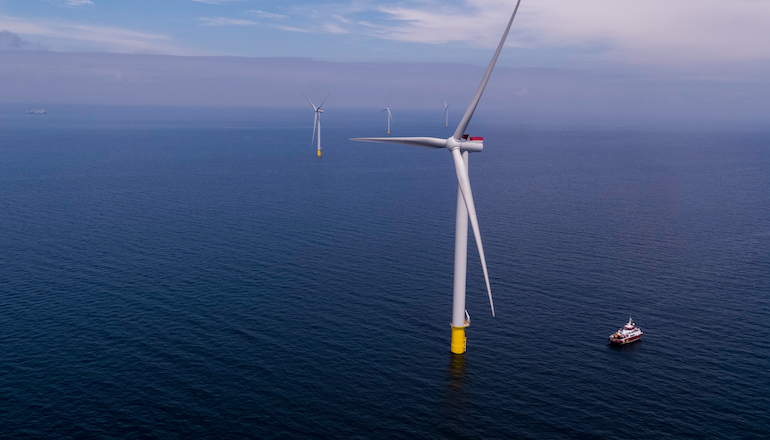
Vattenfall has reduced the size and footprint of the onshore electrical infrastructure required for its 3.6GW Norfolk offshore wind zone in the UK North Sea.
The Swedish developer decided to make the changes following feedback from local stakeholders which requested the electrical infrastructure near Necton be made as discreet as possible in the local landscape.
It has been able to reduce the number of converter stations to be built from four to three by using newer cables and an innovative configuration of the electricity network, significantly reducing the footprint of the electrical infrastructure.
Alongside the smaller area required, a proposed new layout for the electrical infrastructure will also help it appear more compact and reduce the extent it is visible to the south and north.
The converter stations will be oriented in a north-east to south-south-west direction, with the shorter end elevations of the converter stations orientated to the south, rather than the longer side elevations, as was previously the case with the original layout, Vattenfall said.
This will reduce the overall horizontal extent visible to the south, the developer added.
Vattenfall’s 3.6GW Norfolk Zone, located off the east English coast, is comprised of the 1.8GW Norfolk Boreas wind farm and the 1.8GW Norfolk Vanguard wind farm.
Both projects will have a joint onshore cable corridor as well as a shared grid connection at the Necton substation.
Vattenfall’s Norfolk Zone project director Rob Anderson said: “We’re committed to the region so it’s great to be able to use new, innovative solutions to deliver improvements for local communities.
“We’re using cutting-edge engineering that will help us to reduce the overall impact on residents which includes minimising the visual impact.
“The Norfolk Boreas Offshore Wind Farm will also be a great boost for the local economy, supporting jobs and growth, as part of the Norfolk Offshore Wind Farm Zone.
“We’ll continue to work closely with communities to make sure that lasting local benefits deliver for people in the region, as well as bringing clean, secure, home-grown power to millions of homes across the country.”