


Avangrid and CIP’s 804MW Vineyard Wind and GE Vernova have put in place a three-step inspection process that will allow the company to resume turbine installation after confirming that a manufacturing defect was behind a July blade failure at the array off the coast of Massachusetts.
The plan, according to Vineyard Wind, will begin with the processing of over 8,300 ultrasound testing records, to determine whether bond requirements are satisfied. Any issues identified will be further inspected and corrective action taken as necessary, Vineyard Wind said.
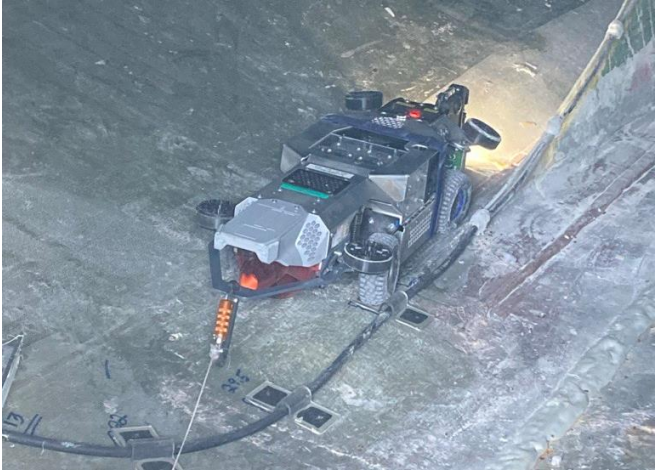
Second, the developer will use advanced remote-controlled wheeled drones called “crawlers” inserted into the blades. The crawlers will use cameras to feed photos and videos to technicians who will examine the blades for anomalies.
GE Vernova will also be deploying a new algorithm using sensors in the blade to monitor blade health.
“We believe we have the right plan in place to recover the rest of the blade, secure any debris offshore and onshore, and safely and responsibly resume the installation program so we can put this project back on track to deliver needed clean power to the New England region,” Vineyard Wind CEO Klaus S. Møller said.
The plan was developed in compliance with the Bureau of Safety and Environmental Enforcement’s superseding order, as well s the U.S. Coast Guard.
In addition to the testing regime Vineyard Wind is working with contractor Resolve Marine to remove the rest of the damaged blade. The process involves four steps: rotating the blade to reduce hanging blade and possible controlled cutting; removing the root of the blade from the hub; removing fallen debris from the platform; and addressing seabed debris.
The review of ultrasound photos and the use of crawlers to inspect existing blades has already begun, Vineyard Wind said.
The company said it is working with Federal, Tribal, state, and local stakeholders to restart construction.