


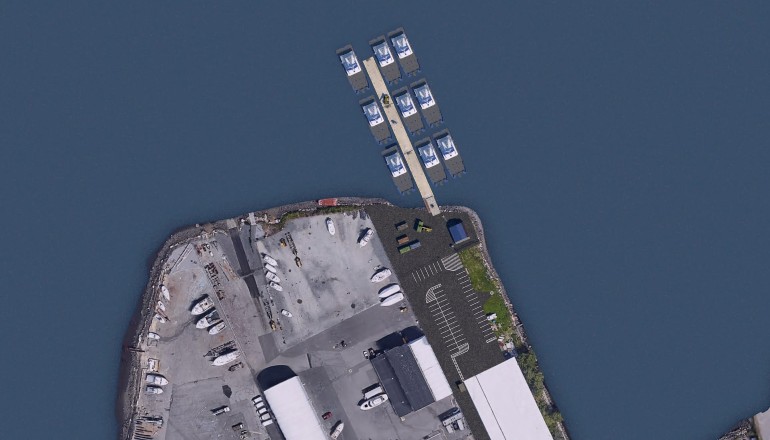
Vineyard Wind has signed a partnership with Shoreline Offshore to build out a berthing and fuelling area for Crew Transfer Vessels (CTVs).
Under the agreement, Vineyard Wind will provide $750,000 in funding through its Industry Accelerator Fund, which is co-managed by the Massachusetts Clean Energy Center (MassCEC), to support the acquisition of two floating barges to meet the berthing needs of Vineyard Wind and future developers.
The vessels will be located on the northern side of Pope’s Island, which is fully protected by the New Bedford Hurricane Barrier, and help developers work during both the construction and operations and maintenance phases of the different projects.
In addition to the barges, Shoreline Offshore will upgrade its existing facilities, including the addition of fuel tanks and other infrastructure needed to serve New Bedford’s multiple maritime industries.
Once installed, the floats will be able to berth up to six CTVs and meet the specifications of the offshore wind industry, with access to a fuelling station, potable water, ramp, and full security. This project will also increase fuelling capacity in the New Bedford Harbor, which is currently limited to one terminal.
Shoreline Offshore is currently working on final designs and permitting for the fuel terminal and expects it to be installed and operational by April 2023.
Vineyard Wind is developing an 800MW project off the coast of Martha’s Vineyard, set to begin delivering clean energy to Massachusetts in 2023.
Shoreline Offshore is a joint venture between the Quinn Family, a long-time member of the fisher community in New Bedford and integrated logistics provider SEA.O.G Offshore.
“We’re proud to partner with the Quinn family on a unique project that meets the evolving needs of both commercial fishing and offshore wind,” said Vineyard Wind CEO Klaus Moeller.
“By expanding the capability of this site, we not only secure a great location for our vessels, we also are improving facilities that can serve other fishing vessels and increase fuelling capacity of the harbour – a win-win for both of New Bedford’s vitally important industries.”