


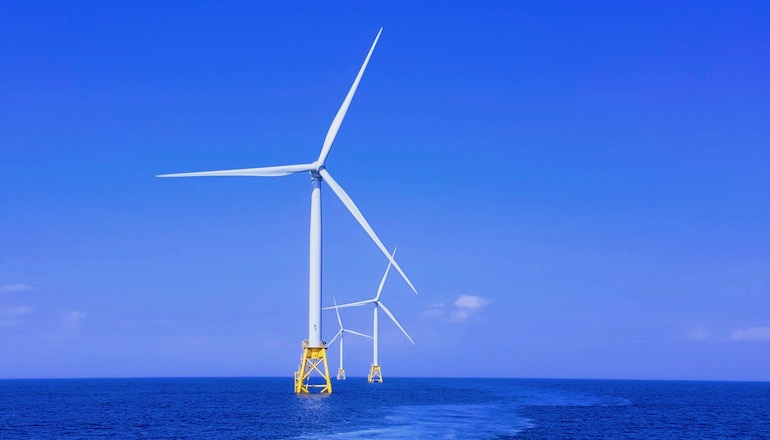
Vietnam could potentially bring online up to 10GW of offshore wind by 2030, according to recommendations by the World Bank and the Danish Energy Agency.
The findings were presented by the organisations to the Vietnamese government as part of efforts to develop an offshore wind sector.
The studies are being presented ahead of the release of the new Power Development Plan 8 outlining the pathway for the next 10 years of power sector development in Vietnam with a vision for 2045.
Vietnam has an estimated potential of 160GW of offshore wind capacity within 5 km and 100 km from shore.
Consultants from the Danish Energy Agency and the World Bank carried out assessment of potential and grid transmission capacity, local supply chain capacity, opportunities and challenges in offshore development, policy and management experience from countries with advanced offshore industry as well as recommendations for a roadmap to offshore wind power development.
The studies will be finalised taking into consideration the opinions and suggestions from the conference participants and will be submitted to the government of Vietnam in the near future.
Ministry of Industry and Trade director general of electricity and renewable energy Hoang Tien Dung said: “The government of Vietnam is always committed to the development of a sustainable energy sector and the timing now is very critical with our national Power Development Plan 8 preparation by the Ministry of Trade and Industry being underway.
“We, therefore, highly appreciate advice and recommendations from Denmark and the World Bank, our long term partners who have possessed many years of experience and knowledge in renewable energy ahead of us.”
The Danish Energy Agency and the World Bank Group have made several recommendations including “clear, long-term and progressive capacity deployment targets” to coordinate policies on government level and give the industry the “needed confidence” to make long-term investments in infrastructure, supply chains and technology.
They also recommended a “sound legal framework and a financeable power purchase agreement” in line with international practices to offset market risks.
Other recommendations include awarding large-scale demonstration projects to be commissioned in phases in order to kick-start the sector.
Meanwhile Vietnam is set to be the “shining star” in south-east Asia’s race to add wind power capacity.
The country accounts for 66% of new capacity expected to be added by the end of the decade in Wood Mackenzie’s recent market research.
The rise in projects in Vietnam is driven by the government’s decision to upgrade the wind feed-in-tariff (FiT) in 2018 to $85 per megawatt hour for onshore wind and $98/MWh for intertidal offshore wind with a 2021 deadline for both FiTs, though a potential extension to 2023 is still to be decided.
The study found south-east Asia’s wind power sector requires at least $14bn of investments by 2030 to support 8.9GW of new wind power capacity that Wood Mackenzie forecasts will be added between 2020 and 2029.