


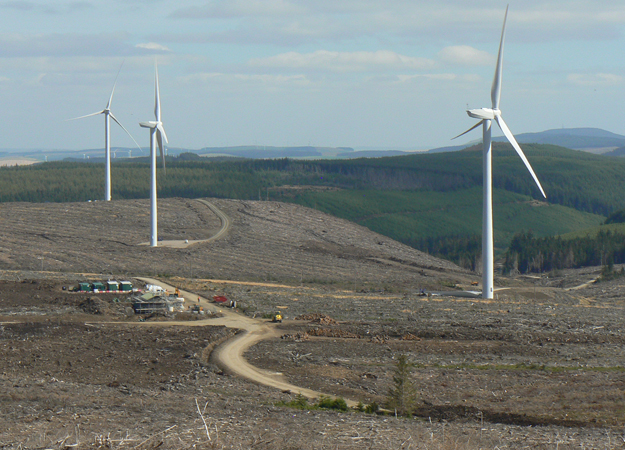
Up to 8000 jobs and £30bn of scheduled investment in Scottish onshore wind projects could be put at risk if the UK government approves zonal energy pricing proposals later this month, a new report warns.
The analysis by independent consultancy Biggar Economics was carried out on behalf of the Fairer Energy Future campaign, a coalition of organisations and businesses calling for an enhanced national pricing framework.
Fairer Energy Future campaign members including UK Steel, Ceramics UK, OnPath Energy and Scottish Renewables have criticised zonal pricing proposals, warning there will be delays in investment due to the uncertainty around policy implementation.
More than 10GW of projects are in the Scottish onshore wind development pipeline.
Biggar Economics looked at the economic impact that the delivery of the pipeline would bring to Scotland.
On average, every 1GW of onshore wind to be built between 2030 and 2035 will support around 800 new jobs in Scotland during its construction and a further 200 jobs once each site becomes fully operational, the research found.
There are currently over 12,000 jobs supported by the onshore wind sector today in Scotland, many of which are reliant on the current pipeline being delivered.
On average, a commitment of £1.5bn of initial capital investment has been made per gigawatt of onshore wind, with a total £3bn of lifetime investment (assuming a 30-year lifespan) – investing a combined total of £30bn and 8000 new jobs to the Scottish economy.
However, campaigners warn that these investment plans are now at risk due to the uncertainty that the zonal energy pricing proposals would bring.
Instead of adopting a local or regionalised system where consumers and businesses in the different parts of the country could have substantially different energy prices from other areas in Britain, Fairer Energy Future is calling for an enhanced national pricing regime.
Fair Energy Future’s commitments include ensuring price competition in short-term markets; reform of the planning, funding and operation of interconnectors, and a reform of consumer bill cost allocation.
A spokesperson for Fairer Energy Future said: “Proponents of a zonal energy pricing system argue that it will help the UK reach net zero.
“On the contrary, the latest research shows that billions of pounds worth of renewable investment and thousands of jobs would be at risk if these proposals are green-lit by the government.
“Following the uncertainty of Brexit and the pandemic, including wars on the continent which have driven up energy prices, it’s clear that now is not the time for more risk for business.
“Our ‘enhanced national pricing’ proposal provides a more suitable and sensible alternative to zonal pricing.
“It’s fairer, cheaper and greener, getting us to clean power by 2030 without the uncertainty and unknowns zonal pricing brings with it.
“And at a time when the country is seeking to boost economic growth, jobs and productivity, we strongly believe enhanced national pricing is the right way forward.”