


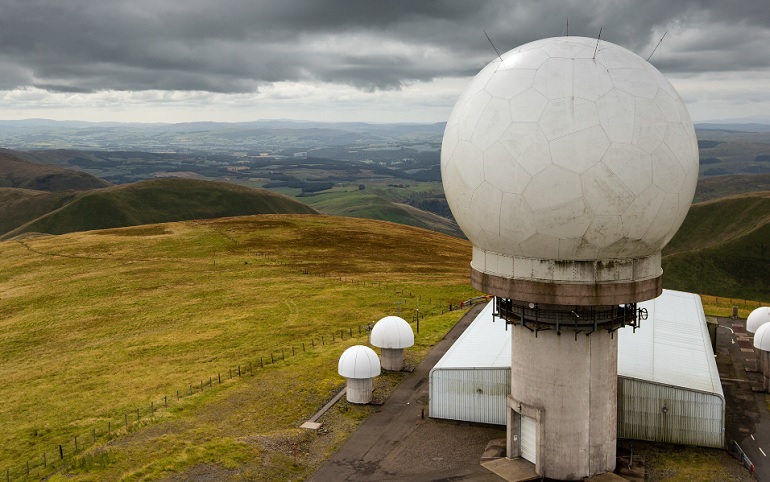
An advanced radar system has been brought online in Scotland that promises to open the door to new gigawatts of onshore wind in the UK.
The 3D Primary Surveillance Radar system developed by UK air traffic control services provider NATS in Lowther Hill mitigates against the impact of wind turbines to conventional radar technology within a range of 120 miles.
It will allow multiple proposed wind farm developments to go ahead, according to NATS, unlocking 2.5GW of renewable energy deployment with the potential to release further megawatts in the future.
NATS strategy and commercial director Guy Adams said: “We have long been committed to working with the renewables industry to find the best way to mitigate the impact of wind turbines.
“This new radar – the first to be deployed in UK civil aviation – is another tool to help us do that.
“It will unlock a huge amount of vital renewable energy, while making sure air traffic operations continue to be safe and efficient.”
Wind turbines typically cause interference to conventional radar, appearing as “clutter” that can potentially hide or be mistaken for aircraft.
In most cases, NATS can work with the turbine developer to mitigate the impact using a range of techniques, but those aren’t always long term, scalable solutions, the air traffic company said.
The introduction of a new radar system that can better filter this clutter means developers can pursue renewable energy projects with confidence, while the ongoing safety of air traffic operations is assured.
The new radar went online in September following two years of engineering work and thorough flight testing and integration.
NATS Services has covered the initial costs of deploying the system, and will recover these over a number of years from developers who are now able to proceed with projects that might otherwise have stalled.