


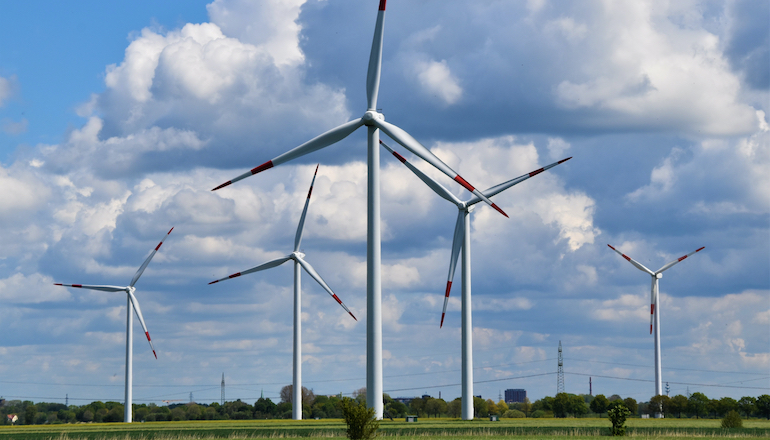
Savannah Energy has signed an agreement with the government of the Republic of Niger for a 250MW wind farm, which will be the African country’s first once built.
Savannah Energy signed an agreement with the Ministry of Petroleum, Energy and Renewable Energies of the Republic of Niger for the construction and operation of Parc Eolien de la Tarka.
It will be built on an independent power producer (IPP) basis in the Tahoua Region of southern Niger.
The project is expected to be sanctioned in in 2023, with first power generation in 2025.
Parc Eolien de la Tarka is expected to be owned by a subsidiary of Savannah, Savannah Parc Eolien de la Tarka (SPET).
The wind farm will host up to 60 wind turbines.
The initial phase of the project will see SPET carry out a 24-month feasibility study which will include an assessment to confirm the wind conditions and an assessment as to how the generated power would be incorporated into the national and regional electricity grids.
The project is expected to take advantage of the development of the West African Power Pool (WAPP), a high voltage interconnection network allowing power exchanges between countries in the region and increased grid stability.
Niger is scheduled to be connected to the WAPP in 2023 via a 330 kV line financed by the World Bank, the African Development Bank, the European Union and the Agence Francaise de Developpement.
The construction phase of the project is expected to create over 500 jobs.
Savannah expects to fund the Project from a combination of its own internally generated cashflows and project specific debt.
Sani Mahamadou, Minister of Petroleum, Energy and Renewable Energies, of the Republic of Niger, said: “I am delighted to announce our plans today for the development of Parc Eolien de la Tarka.
“This is a truly transformational project for Niger, potentially increasing the country’s on-grid power generation capacity significantly.
“Such a project is expected to stimulate a significant increase in economic activity across our country, directly and indirectly creating thousands of jobs over the course of the next decade.”