


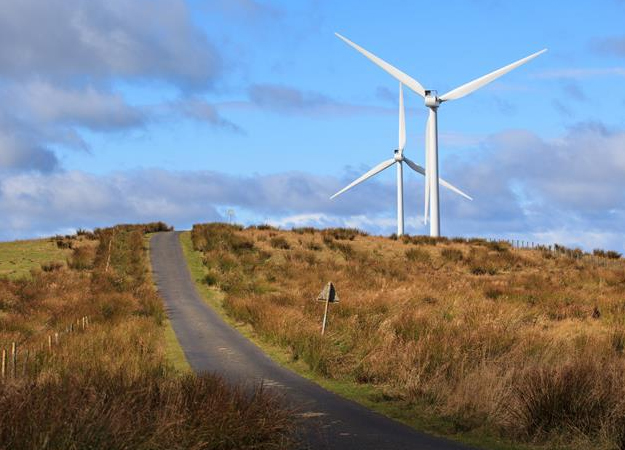
SSE leads the pack of remote islands wind developers seeking a Contract for Difference in the UK’s upcoming third allocation round with its 457MW Viking project on Shetland.
The company confirmed to reNEWS that it will enter the 103-turbine project with tips heights of 155 metres into the auction, which kicks off on 29 May.
Other remote islands schemes to be put forward include EDF Renewables/Wood Group’s 180MW Stornoway on the Western Isles, Hoolan Energy’s combined 37MW Costa Head/Hesta Head duo on Orkney, as well as others.
Analysts said remote islands projects could compete with offshore wind due to high wind speeds and the falling cost of onshore turbines, but grid connections add a layer of cost and uncertainty.
“It could be cost-competitive but it is also very new with different risks around grid we haven’t seen before in CfD auctions,” said Cornwall Insight chief executive Gareth Miller.
Winning CfD3 bids are expected to be in the £47-53 per megawatt-hour range, he added.
“Any technology needs to bid below £56/MWh for 2023-24 delivery year or £53/MWh (for 2024-25 delivery year) because offshore wind is going to be below that and there’s more offshore wind that can bid than the 6GW (total allocation) cap,” he added.
“There’s potentially over 8GW or more that could bid in, which gives an extra competitive dynamic for other technologies trying to beat this.”
Other technologies eligible for the auction include tidal, wave, geothermal and fuelled technologies such as anaerobic digestion and biomass with CHP.
Simec Atlantis confirmed to reNEWS that it will place a bid to secure a CfD for its 80MW MeyGen Phase 1C tidal array in the Pentland Firth.
“We’re going to put in a very competitive but realistic bid,” said chief executive Tim Cornelius.
“We acknowledge it could be difficult (to win a CfD) but, that said, there is an opportunity to fit in (under the 6GW cap) as we are only 80MW, the auction mechanics could help us,” he added.
Miller said small projects could squeeze in under the 6GW cap with a competitive bid.
“You could get a situation where some offshore wind doesn’t bid as expected and a small project at a higher strike price gets accepted, although this very dependent on other technologies being cheap enough to compete,” he added.