


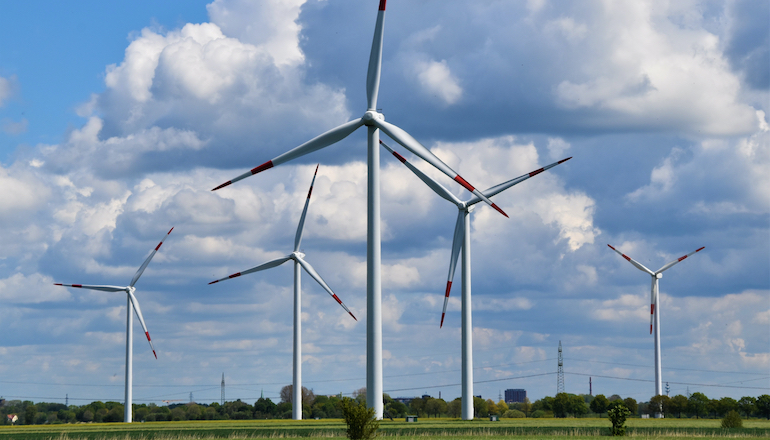
TransAlta Renewables will need to replace all 50 foundations at its Kent Hills 1 and 2 wind farm complex in the Canadian province of New Brunswick, after an investigation into a tower collapse at the Kent Hills 2 site.
The decision follows independent engineering assessments and root cause failure analysis.
The root cause failure analysis indicates that deficiencies in the original design of the foundations have caused crack propagation within the foundations and that the foundations must be replaced.
The 167MW Kent is owned by an 83% interest by the company’s indirect subsidiary, Kent Hills Wind.
Natural Forces Technologies owns the remaining 17%.
The facility was completed in three phases and achieved commercial operation in December 2008 and November 2010.
Five turbines at Kent Hills 3 began commercial operations in October 2018.
The company is in the process of planning the rehabilitation of the 1 and 2 and currently expects the wind facility foundations to be fully replaced by the end of 2023.
Based on the recommendations of independent engineers, and in order to maintain the safety of the affected sites and turbines, the turbines will cease to operate until their associated foundations are remediated.
The foundation issues at the Kent Hills 1 and 2 sites are unique to the design of those sites, TransAlta said.
It found no indication of any foundation issue at the Kent Hills 3 site or the company’s other wind sites.
TransAlta Renewables president Todd Stack said: “We remain focused on our objective to safely return the site to service as soon as reasonably practicable.
“We are appreciative of the support and cooperation of NB Power in furtherance of NB Power’s commitment to deliver reliable, safe and clean energy to its customers.
“As a result of the site remaining down for an extended period during remediation, we also continue to work closely with our project lenders and look forward to being able to resume delivery of renewable electricity as the foundation replacements are complete.”
Based on initial estimates, replacement of the 50 foundations is expected to cost between $75m (€66m) and $100m in aggregate.
It is expected to result in foregone revenue of approximately $3.4m per month on an annualised basis for aslong as all the turbines are offline, based on average historical wind production.
Revenue generation is expected to resume as turbines are individually returned to service following foundation replacement.
TransAlta said it is actively evaluating any options that may be available to recover these costs from third parties and insurance.
The company has been in discussions with New Brunswick Power Corporation (NB Power) and they have been supportive of the efforts undertaken to investigate the incident and return the site to service in a safe and prudent manner in accordance with good industry practice.
TransAlta expects to work closely with NB Power through the remediation process.
As a result of the determination that all 50 foundations require replacement, as well as certain resulting amendments to applicable insurance policies, the company has provided notice to BNY Trust Company of Canada, as trustee for the approximately $222m outstanding non-recourse project bonds secured by, among other things, the Kent Hills 1 and 2 wind sites, that events of default may have occurred under the trust indenture governing the terms of the Bonds.
Upon the occurrence of any events of default, holders of more than 50% of the outstanding principal amount of the bonds have the right to direct the trustee to declare the principal and interest on the bonds and all other amounts due thereunder, together with any make-whole amount due thereunder, to be immediately due and payable and to direct the trustee to exercise rights against certain collateral.
TransAlta intends to engage in discussions with the trustee and holders of the bonds to negotiate required waivers and amendments while the company works to remedy the matters described in the notice.
Although the company expects that it will reach agreement with the trustee and holders of the bonds with respect to terms of an acceptable waiver and amendment, there can be no assurance that the company will receive such waivers and amendments, it said.