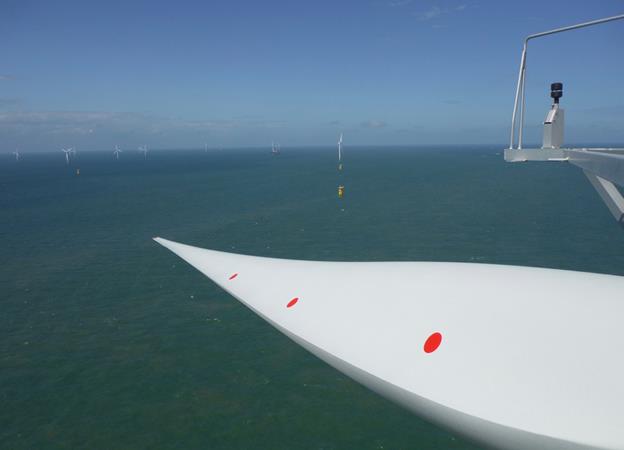
Innogy has reduced the number of onshore cable circuits needed to connect the 860MW Triton Knoll offshore wind farm to the UK national grid.
The developer said the changes will reduce the overall construction footprint and costs.
Two circuits of three 220kV cables will now be developed instead of the original six circuits of three cables to deliver electricity from the transition joint bays at landfall near Anderby to the proposed Triton Knoll onshore substation.
This section will be installed by onshore cable contractor J Murphy & Sons.
From the onshore substation to the existing National Grid substation at Bicker Fen two circuits of three 400kV cables will now be deployed instead of four circuits of three wires.
Siemens Transmission and Distribution will manage this section of the onshore cable route, Innogy said.
Triton Knoll project director Julian Garnsey said: “Our design optimisation, carried out in partnership with UK contractors J Murphy & Sons and Siemens Transmission & Distribution is continuing to help deliver the cost and impact reductions anticipated by the project.
“We’re very pleased to be able to deliver maximum power from this decreased number of circuits, thereby reducing the project’s local construction footprint.”
Triton Knoll, which wil be located off the coast of Lincolnshire in England, was awarded a CfD in September 2017 and is now progressing towards a financial investment decision, which is expected in the summer.
Onshore construction would start shortly after, with offshore construction kicking off in 2020.
First power from the project could be as early as the first quarter of 2021.
Image: Innogy
Triton tightens onshore wires
 By EBS