


Accelerating wind and solar deployment should be one of several measures to enable the EU to reduce its exposure to Russian natural gas, according to the International Energy Agency (IEA).
The emphasis on building more renewables forms part of a 10-point plan which could allow the EU to reduce its imports of Russian natural gas by more than a third within a year, if adopted.
The IEA found that accelerating the deployment of new wind and solar projects would reduce gas use by six billion cubic metres within a year.
Europe’s reliance on imported natural gas from Russia has “again been thrown into sharp relief” by Russia’s invasion of Ukraine.
In 2021, the EU imported 155 billion cubic metres of natural gas from Russia, accounting for around 45% of EU gas imports and close to 40% of its total gas consumption.
The IEA’s 10-Point Plan to Reduce the European Union’s Reliance on Russian Natural Gas includes a range of complementary actions that can be taken in the coming months and the combination of measures “would be consistent with the European Green Deal and support energy security and affordability”.
In addition to accelerating wind and solar the measures include not signing any new gas supply contracts with Russia to enable greater diversification of supply this year and beyond.
They also include ramping up energy efficiency measures in homes and businesses, stepping up efforts to diversify and decarbonise sources of power system flexibility, to loosen the “strong links” between gas supply and Europe’s electricity security.
Maximising power generation from bioenergy and nuclear, another measure, would reduce gas use by 13 billion cubic metres within a year.
Progress towards Europe’s net zero ambitions will bring down its use and imports of gas over time, but today’s crisis raises the specific question about imports from Russia and what more can be done in the immediate future to bring them down.
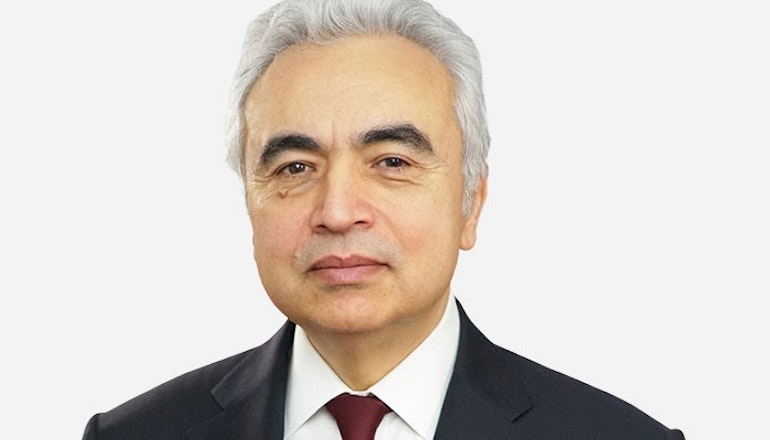
IEA director Fatih Birol said: “Nobody is under any illusions anymore. Russia’s use of its natural gas resources as an economic and political weapon show Europe needs to act quickly to be ready to face considerable uncertainty over Russian gas supplies next winter.
“The IEA’s 10-Point Plan provides practical steps to cut Europe’s reliance on Russian gas imports by over a third within a year while supporting the shift to clean energy in a secure and affordable way. Europe needs to rapidly reduce the dominant role of Russia in its energy markets and ramp up the alternatives as quickly as possible.”
Kadri Simson, European Commissioner for Energy, said: “Reducing our dependence on Russian gas is a strategic imperative for the European Union.
“In recent years, we have already significantly diversified our supply, building LNG terminals and new interconnectors.
“But Russia’s attack on Ukraine is a watershed moment.
“Next week, the Commission will propose a pathway for Europe to become independent from Russian gas as soon as possible. The IEA’s analysis outlines a number of concrete steps we can take towards that goal. It is a very timely and valuable contribution to our work.”
Taken together, these steps could reduce the European Union’s imports of Russian gas by more than 50 billion cubic metres within a year, the IEA estimates.
This takes into account the need for additional refilling of European gas storage facilities in 2022.