

Close Menu
reNEWSreNEWS
  • Home
  • Offshore Wind
  • Onshore Wind
  • Solar
  • Other News
    • Energy Storage
    • Finance
    • Grid
    • People
    • reMIX
  • More
    • Company Profiles
    • Events
    • National Wind Energy Awards 2026
Latest News

PODCAST: Is UK offshore wind back on track?

All-Energy 2026: Shanks bullish on UK clean power

GWEC, TÜREB launch wind partnership

LinkedIn Facebook X (Twitter)
  • Email Briefings
  • About
  • Advertise
  • Contact
reNEWSreNEWS
  • Home
  • Offshore Wind

    PODCAST: Is UK offshore wind back on track?

    May 13, 2026

    UK offshore wind pipeline reaches 93GW

    May 13, 2026

    Seaway7 completes Hai Long cable works

    May 13, 2026

    DEME names new jack-up vessel

    May 13, 2026

    Mubadala invests $325m into Hornsea 3

    May 13, 2026
  • Onshore Wind

    ENERCON to build Türkiye blade plant

    May 13, 2026

    ‘Fatality at South Korean wind farm’

    May 13, 2026

    Scottish onshore wind forum launches

    May 12, 2026

    ENOVA starts 30MW Hiddels repowering

    May 12, 2026

    Iberdrola buys 40MW Italian wind farm

    May 12, 2026
  • Solar

    VSB secures Sicily PV project approval

    May 13, 2026

    Matrix connects two Spanish renewable projects

    May 13, 2026

    Qualitas targets €10bn energy investments

    May 12, 2026

    Consultation opens for 49.9MW Barrons Solar

    May 12, 2026

    Great North Road solar nears decision

    May 11, 2026
  • Other News
    • Energy Storage
    • Finance
    • Grid
    • People
    • reMIX
  • More
    • Company Profiles
    • Events
    • National Wind Energy Awards 2026
LinkedIn Facebook X (Twitter)
reNEWSreNEWS
Home » Uncategorized » Asia-Pacific renewables costs ‘increased’ in 2021
Other News

Asia-Pacific renewables costs ‘increased’ in 2021

Robin LancasterBy Robin LancasterJanuary 11, 20224 Mins Read
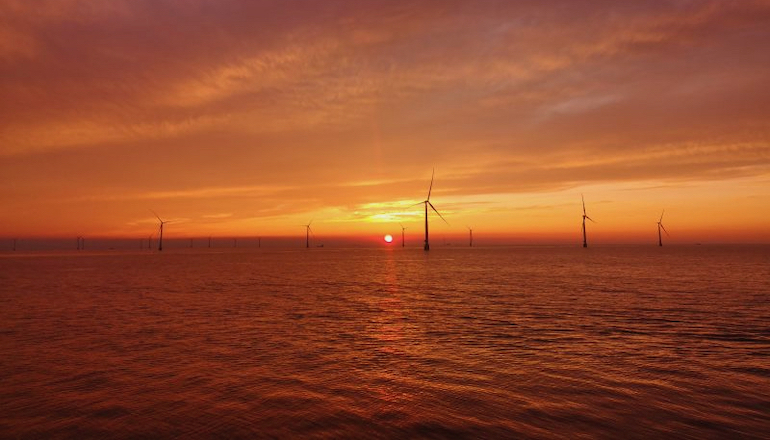
The Zhanjiang Wailuo offshore wind farm in China

Asia-Pacific’s levelised cost of electricity (LCOE) for renewable electricity broke historical trends and rose in 2021, but still gained ground against fossil fuel power, according to analysis by Wood Mackenzie.

The research said that last year Asia’s power crisis sent fossil fuels and renewable sources into a frenzy as prices spiked amidst strong demand and supply chain tightness.

Advertisement

Spot market fuel prices averaged over the year pushed up costs of coal and gas power by 19% and 46% respectively, making renewables – utility PV and onshore wind – appear more competitive.

However, increased equipment and logistics costs meant that solar and wind power were also hit by cost inflation.

Wood Mackenzie senior analyst Rishab Shrestha said: “The average LCOE across Asia Pacific for new solar projects increased by 9% to $86 per megawatt-hour (MWh) and for onshore wind projects by 2% to $103/MWh last year.

“Renewables’ supply chain bottlenecks are expected to ease in 2022 and beyond, and the respective LCOE will return to a declining trend.”

Wood Mackenzie said that currently renewable power costs in Asia Pacific are about 16% more expensive on average compared to fossil fuel power costs over the project lifetime.

India, China and Australia are the top three leaders with renewable power being between 12% and 29% cheaper than the lowest-cost fossil fuel, coal.

Other major markets still have a significant renewables premium.

Shrestha said: “Interestingly, China is the only Asia Pacific market which has bucked the renewables premium cost inflation trend in 2021, supported by a mix of factors including rising fossil fuel prices, domestic manufacturing, zero-tolerance Covid policy, and its commitment towards climate change.”

Wood Mackenzie forecasts that by 2030, electricity from renewables – mostly utility PV – will be at a 28% discount to coal across the region.

India, Australia and China remain low cost champions for renewable power with LCOE discounts ranging from 50% to 55%.

Both onshore wind and solar will be at a discount or at parity with gas and coal power in these markets.

However, offshore wind LCOE in Asia Pacific will not be competitive against gas-fired power (CCGT) until the 2030s, except for China which will hit this milestone in the early 2020s, the analyst said.

Nuclear, hydro and geothermal are among the cheapest low carbon dispatchable power options costing between $84/MWh and $93/MWh in 2021, it added.

This is already cheaper than gas-fired power, which remains flat at around $105/MWh.

“These conventional technologies are likely to maintain a cost advantage of over 30% compared to carbon, capture and storage and green fuel blending by 2050,” the analysis found.

Renewables integrated with battery storage has a 50% premium over gas power today but will be competitive by around 2030, becoming an increasing threat to gas power.

CCS is expected to add 70%-100% to generation costs and struggles to compete with firmed renewables and other low carbon options in the longer term, Wood Mackenzie said.

Wood Mackenzie research director Alex Whitworth said: “Economics is a key factor in choosing options to reduce the fossil fuel share of the Asia Pacific power system, which sits at around 70% today. Although wind and solar costs are falling, options for reliable and dispatchable power to support decarbonisation are still very expensive.

“Take Japan for example, a fuel mix of 20% green or blue ammonia plus 80% coal as proposed, will cost around US$150/MWh even by 2030.

“This is more expensive than gas power while still emitting almost twice as much carbon.

“A combination of offshore wind and distributed solar backed up by storage and gas units would have a similar price tag.

“Is Japan ready for a potential doubling of the average power generation costs in 2030 compared to recent years?

“Japan is a very expensive market but across Asia Pacific there are similar challenges.

“A ‘firmed’ or dispatchable combination of low cost renewables, gas peakers and batteries costs around $120/MWh today, about 60% higher than new coal power projects.

“It will take time to bridge the gap – the cost of this combination will fall to below $70/MWh by 2050 and will become competitive with gas in the 2020s and coal in the 2030s.

“At the end of the day, economics is driving a higher share of wind and solar, but low cost intermittent renewables cannot replace fossil fuel power alone.”

Other News Wood Mackenzie
Share. Facebook LinkedIn Bluesky Twitter Reddit Email Copy Link
Previous ArticleEolus partners on 672MW Swedish wind
Next Article EDPR implements new operating model

Related News

‘Renewable energy power costs fall in APAC’

February 28, 2024

Solar, onshore wind electricity prices ‘rise in APAC’

February 14, 2023

Asia Pacific renewables ‘cheaper than coal by 2030’

November 26, 2020
Advertisement

Latest News

PODCAST: Is UK offshore wind back on track?

May 13, 2026

All-Energy 2026: Shanks bullish on UK clean power

May 13, 2026

GWEC, TÜREB launch wind partnership

May 13, 2026

ENERCON to build Türkiye blade plant

May 13, 2026
Advertisement

Advertisement

Company Profiles
  • Leask Marine
  • TGS
  • Seaway7
    Seaway7
  • Qualsurv Marine Consulting
    Qualsurv Marine Consulting
  • Ørsted
  • Oceantic Network
  • Natural Power
    Natural Power
  • LSP
    LSP Renewables
  • Full Circle Wind Services
  • Bilfinger UK
reNEWS
LinkedIn Facebook X (Twitter)
reMIX | Company Profiles | Industry Events
Get in touch | Advertising with us | About reNEWS

© 2026 Lewis Business Media. All Rights Reserved.
Lewis Business Media, Suite A, Arun House, Office Village, River Way, Uckfield, TN22 1SL

Terms and Conditions | Privacy Policy | Cookie Policy

Type above and press Enter to search. Press Esc to cancel.

Manage Consent
To provide the best experiences, we use technologies like cookies to store and/or access device information. Consenting to these technologies will allow us to process data such as browsing behaviour or unique IDs on this site. Not consenting or withdrawing consent, may adversely affect certain features and functions.
Functional Always active
The technical storage or access is strictly necessary for the legitimate purpose of enabling the use of a specific service explicitly requested by the subscriber or user, or for the sole purpose of carrying out the transmission of a communication over an electronic communications network.
Preferences
The technical storage or access is necessary for the legitimate purpose of storing preferences that are not requested by the subscriber or user.
Statistics
The technical storage or access that is used exclusively for statistical purposes. The technical storage or access that is used exclusively for anonymous statistical purposes. Without a subpoena, voluntary compliance on the part of your Internet Service Provider, or additional records from a third party, information stored or retrieved for this purpose alone cannot usually be used to identify you.
Marketing
The technical storage or access is required to create user profiles to send advertising, or to track the user on a website or across several websites for similar marketing purposes.
  • Manage options
  • Manage services
  • Manage {vendor_count} vendors
  • Read more about these purposes
View preferences
  • {title}
  • {title}
  • {title}