


A new report from Orlen Group and S&P Agency reveals how closer energy ties between Poland and other states of the Baltic region are key to unlocking cheaper and more sustainable energy.
Closer cooperation between the Baltic countries could lead to a raft of benefits, the report said.
These include a stable supply of electricity at affordable prices, achieving full independence of the Baltic Sea region from Russian supplies, as well as clean air, through joint projects for the development of new technologies including hydrogen.
The report assesses the progress of the energy transition in the region and identifies opportunities for collaboration to accelerate decarbonisation efforts.
It outlines specific areas of cooperation and their expected outcomes, following an in-depth analysis of conditions across eight countries: Poland, Germany, Denmark, Sweden, Finland, Lithuania, Latvia, and Estonia.
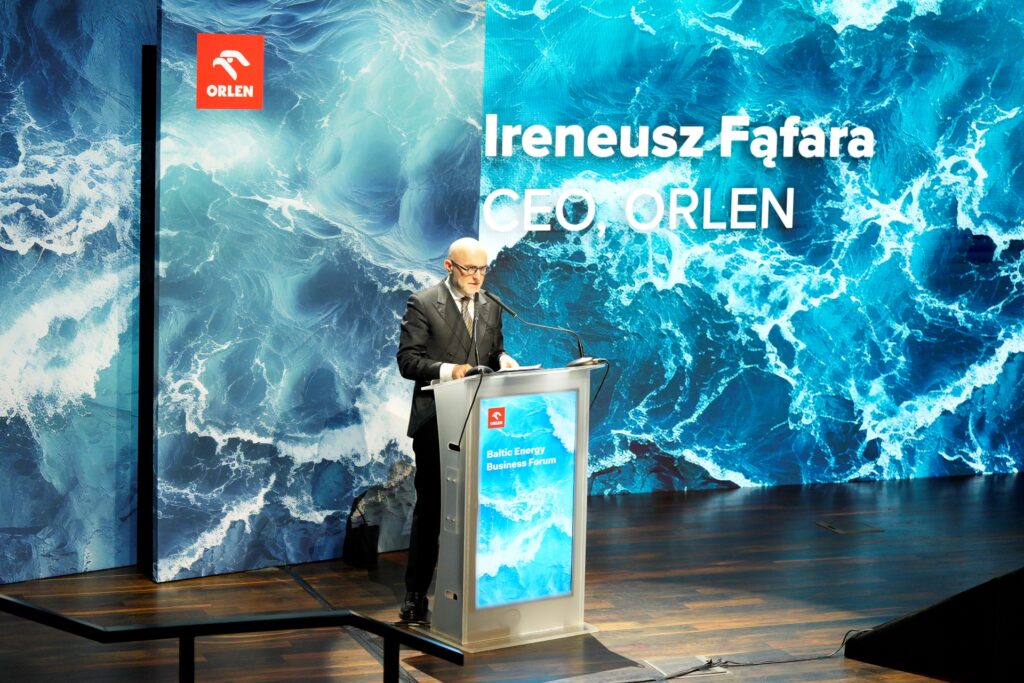
Orlen management board chief executive Ireneusz Fąfara (pictured) said: “We are actively shaping the future of the energy sector in the Baltic Sea region, which is critical to Poland’s energy security and economic future, as well as to the broader European energy landscape.
“By 2035, we plan to invest up to PLN 380bn in renewable energy projects, including offshore wind, as well as in gas infrastructure and new technologies, particularly energy storage solutions.
“By working together with regional partners, we can fully harness the region’s potential and deliver more secure, affordable, and cleaner energy for Poland and our neighbours.”
The report, Baltic Cooperation: Momentum for Energy Transition, highlights the region’s strategic importance to Europe’ decarbonisation, given that it accounts for more than a third of the EU’s total energy consumption and emissions.
The combined potential for renewable energy generation, including offshore and onshore wind, solar, and hydropower, is estimated at 4400TWh, four-and-a-half times the total Baltic countries’ energy output in 2023.
Despite this high potential, the region still faces the problem of how to balance security, sustainability, and affordability.
One of the most effective solutions could be stronger collaboration, in particular between Poland, Germany, Denmark, Sweden, Finland, Lithuania, Latvia and Estonia, which could accelerate the energy transition by fully leveraging the region’s potential.
Hydrogen is a promising area for cooperation, the report found. As a clean energy source, hydrogen and its derivatives could help decarbonise heavy industry and transport in the Baltic region.
Orlen supports the idea of a regional hydrogen auction, which would give industrial players better access to cost-effective, stable hydrogen supplies.
The total offshore wind potential in the Baltic Sea stands at 93GW, yet only about 3GW is currently operational, compared to 32GW in the North Sea.
Experts emphasise that without enhanced collaboration on maritime spatial planning and harmonised permitting processes, achieving the Marienborg Declaration’s target of 19.6GW of installed offshore wind capacity in the Baltic by 2030 may prove unattainable.