The Renewables Obligation (RO) has today closed to new applications after 15 years of supporting the construction of low-carbon power in the UK.
The subsidy scheme came into effect in England, Wales and Scotland in 2002, followed by Northern Ireland in 2005.
According to Ofgem, the RO has supported 23,500 generating stations comprising 25GW of installed capacity.
The accredited capacity includes 9.3GW onshore wind, 5GW offshore wind and 5.3GW solar PV.
In 2015/16, 23.4% of the UK’s electricity was generated by RO accredited power stations with 90.4m RO certificates issued on the basis of 69.1TWh.
Energy minister Jesse Norman said: “The RO has helped to move the UK from having barely any clean energy 15 years ago to having nearly a quarter of all its electricity coming from renewable technologies.
“This government remains fully committed to cleaning up our energy system and our support will continue through the more competitive Contracts for Difference scheme.”
The closure of the scheme takes effect from 31 March although some installations may qualify for a grace period.
“The RO will run for another 20 years and we will continue to issue ROCs and monitor compliance on a scheme that is worth in excess of £4.5bn a year,” said Ofgem E-Serve head of renewable generation Luke Hargreaves.
“We will also determine any applications made prior to closure and any subsequent grace period applications.”
The renewables industry called on the UK government to renew price support for onshore wind and solar.
The Renewable Energy Association urged BEIS to reintroduce technologies covered by Pot 1 and Pot 3 CfD auctions and to use the forthcoming Industrial Strategy and Clean Growth Plan to support the construction of low-carbon power.
“One of the best characteristics of the RO was the fact you knew when you could build a project under the scheme and the renewables industry has been able to grow by having this stable, consistent policy mechanism,” said REA policy lead James Court.
“Without the RO the industry is left with the CfD mechanism; while this does support new generation auctions take place at unpredictable intervals and the policy is prone to government more directly picking winners,” he added.
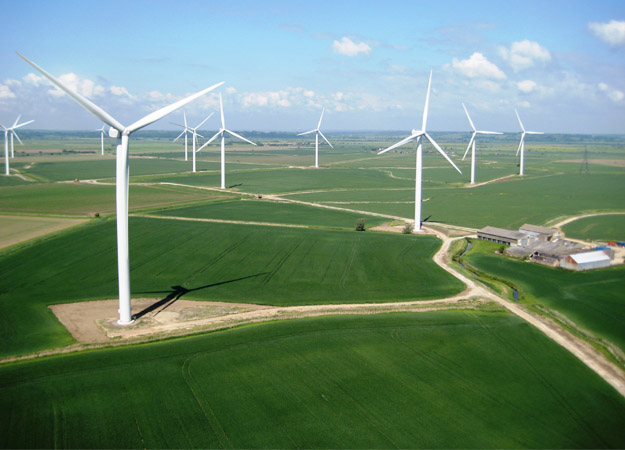
Image: Little Cheyne Court (Innogy UK Renewables)