


The European Green Deal will be a key pillar of a post-Covid-19 economic recovery plan proposed by the European Commission today.
To ensure the recovery is “sustainable, even, inclusive and fair” for all Member States, the European Commission has proposed a new recovery instrument, Next Generation EU, embedded within a revamped long-term EU budget valued at €1.1tn between 2021-2027.
Through Next Generation EU the Commission will borrow €750bn on the financial markets bringing the “total financial firepower” of the EU budget to €1.85tn.
Investment in the Next Generation EU programme will be guided by “priorities identified in the European Semester, National Energy and Climate Change Plans (NECPs) and Just Transition Plans,” said the Commission.
The funding will be channelled through the Green Deal and other EU programmes and repaid over a long period of time throughout future EU budgets.
The Commission’s proposals also include investment guidelines for a €31bn Solvency Support Instrument targeting the private sector that will also “reflect the need to prioritise green investments” and will be supported by 25% of the EU budget spent on climate investments and additional funding for Horizon Europe.
The EU will also launch a Renewed Sustainable Finance Strategy later this year. To ensure environmental and social interests are fully embedded into business strategies, the Commission will put forward a new initiative in 2021 on sustainable corporate governance.
The Commission said the measures should “help the European Green Deal become a job-creating engine”.
“Meeting the existing 2030 climate and energy targets can add 1% of GDP and create almost a million new green jobs and help the increase the EU’s resilience to global supply issues.”
The Strategic Investment Facility will invest in technologies key for the clean energy transition, such as renewable and energy storage technologies, clean hydrogen, batteries, carbon capture and storage and sustainable energy infrastructure, said the Commission.
The work of the European Battery Alliance will be “fast-tracked” and the new Clean Hydrogen Strategy and Alliance will “steer and coordinate the rapid upscaling” of clean hydrogen production and use in Europe.
The Commission will also release proposals to boost uptake of offshore renewable energy and to better integrate the energy system.
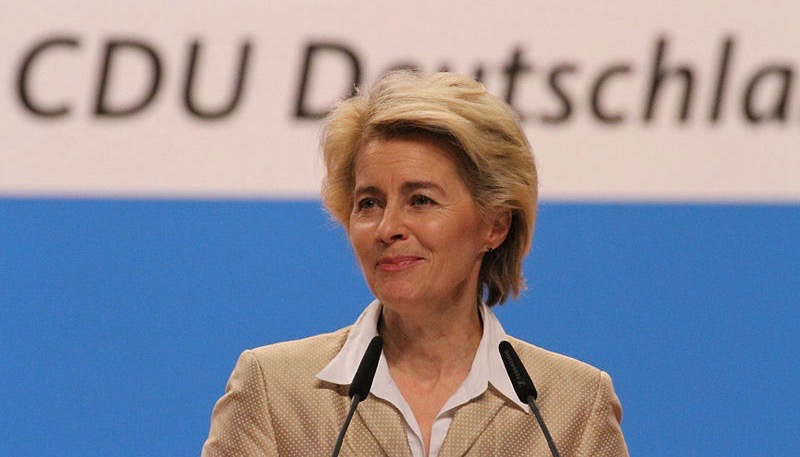
European Commission President Ursula von der Leyen (pictured) said: “The recovery plan turns the immense challenge we face into an opportunity, not only by supporting the recovery but also by investing in our future: the European Green Deal and digitalisation will boost jobs and growth, the resilience of our societies and the health of our environment.
“This is Europe’s moment. Our willingness to act must live up to the challenges we are all facing. With Next Generation EU we are providing an ambitious answer.”
The proposals have been welcomed by WindEurope chief executive Giles Dickson, who described them as “the big bazooka the EU economy requires” and the “right sort of investments”.
He added: “It’s clearly going to be a green recovery. And a boost for the energy transition. The Strategy singles out wind energy as one of the ‘policy fundamentals of the recovery’.
“The EU wants wind to be half of Europe’s electricity by 2050. That means huge investments, jobs and growth. Wind is ready to deliver.
“We look forward to the detailed proposals that’ll help make these investments happen.”
Commenting on the proposals Iberdrola chief executive Ignacio Galan said: “Iberdrola supports the strategy for a rapid and sustainable recovery based on the European Green Deal.
“This important green pact will deliver growth, employment and prosperity. We will see real economic benefits, and the creation of value for society as a whole. The resources, technology and knowledge to move towards a green recovery are already in place. A clear and predictable framework is key to starting quickly.”
The European Council and co-legislators to examine the Commission’s proposals with a view to reaching a political agreement at European Council-level by July.