The UK has set the fifth carbon budget at 1725 MtCO2e in line with advice from the Committee on Climate Change.
The budget sets the cap on UK emissions for the period 2028-2032.
The CCC recommended to DECC that the budget be set to require a 57% reduction in emissions by 2030 on 1990 levels.
The latest carbon budget sets the UK on course to ensuring it meets its legally-binding target of reducing carbon emissions by 80% by 2050 compared to 1990 levels. Its predecessor, the fourth carbon budget, covering 2023 to 2027, set out a 52% reduction.
RenewableUK chief executive Hugh McNeal praised the government for its “bold leadership” on carbon reduction, which it said would secure more investment in British renewables
“This Government is global leader in tackling climate change. Today’s announcement is especially welcome given the uncertainty caused by last week’s referendum,” he said.
The Solar Trade Association said it welcomed the fifth carbon budget decision but short and medium-term questions remain about the government’s commitment to a lowest-cost path to decarbonisation.
STA chair Jonathan Selwyn said: “”As an industry we are on the path to a subsidy-free future, we hope by the early 2020s. To achieve this, we need a flourishing UK industry and a government that allows us to compete on a level playing field with other renewables as well as nuclear and gas.”
The Renewable Energy Association said DECC needed to supplement the fifth carbon budget with an ambitious energy plan to deliver on energy infrastructure.
Head of Policy and External Affairs James Court said: “This would be the worst time for the government to row back or U-turn on existing commitments, which would be toxic to inward investors.
“So this is a positive first step, but will need to be backed up by a robust energy plan by the end of the year.”
Energy and Climate Intelligence Unit director Richard Black added: “Accepting the Committee on Climate Change’s recommendations for the Fifth Carbon Budget will go some way to restoring investor confidence and so controlling costs.”
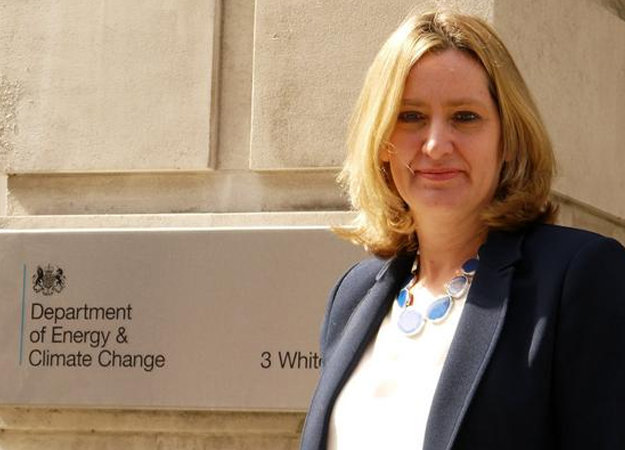
Image: Amber Rudd (DECC)