


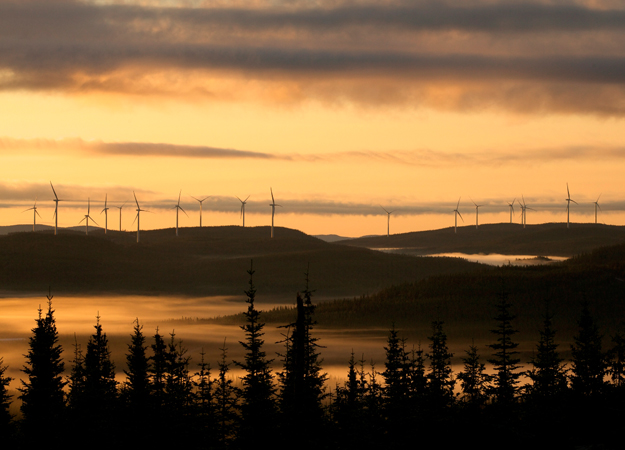
Planning solar and wind projects in areas with a lower conservation priority means developers can avoid the most severe potential negative impacts on biodiversity, according to new guidelines.
The guidelines have been released by the International Union for Conservation of Nature (IUCN), The Biodiversity Consultancy and other partners.
According to the publication ‘Mitigating biodiversity impacts associated with solar and wind energy development: Guidelines for project developers’, habitat loss and fragmentation as well bird and bat collisions are the predominant impacts associated with renewables developments.
IUCN director general Bruno Oberle said: “Large-scale expansion of solar and wind energy is vital for a sustainable, low-carbon future. However, developers must take care to ensure that these technologies do not unwillingly pose risks to nature and livelihoods.
“These new guidelines provide much-needed advice on how to mitigate the potential impacts of wind and solar projects on biodiversity and local communities.”
To minimise biodiversity risks, solar and wild project developers should avoid areas of high environmental significance such as protected areas and conserved areas, World Heritage sites and Key Biodiversity Areas, according to the guidelines.
Other measures recommended by the guidelines include the use of technology that can temporarily shut down select wind turbines to protect birds and other species at particularly active times, or when they are detected in the vicinity by field observers, image-based detection or radar.
The new guidelines provide advice on protecting biodiversity throughout the project life cycle, from early planning through to decommissioning and repowering.
They offer a framework for applying a mitigation hierarchy to avoid, minimise and – where necessary – offset impacts on biodiversity.
The guidelines take into account potential social impacts that may arise when mitigating biodiversity loss, particularly when implementing offsets.
They also offer recommendations for investors and policy makers on how they can play a positive role, such as through the restoration of degraded habitats.
“These guidelines show how the transition to renewables can be achieved without an unacceptable cost to nature.
“By putting nature at the centre of project decision-making, developers can deliver positive outcomes for people and biodiversity alongside energy that is genuinely green,” said Leon Bennun, chief scientist at The Biodiversity Consultancy.
The guidelines also identify a number of areas that urgently need further research, in particular the biodiversity impacts associated with the sourcing of materials for renewables, such as in the construction of solar panels and wind turbines, and the processes for optimising their reuse.
The publication is the product of a joint effort between IUCN and The Biodiversity Consultancy, in collaboration with IUCN Member organisations BirdLife International, Fauna & Flora International, he Nature Conservancy and the Wildlife Conservation Society, as well as Electricite de France (EDF), Energias de Portugal (EDP) and Shell Group.