


Dutch company Eneco is partnering with Neptune Energy on a pilot project to develop green hydrogen from offshore wind generated in the North Sea.
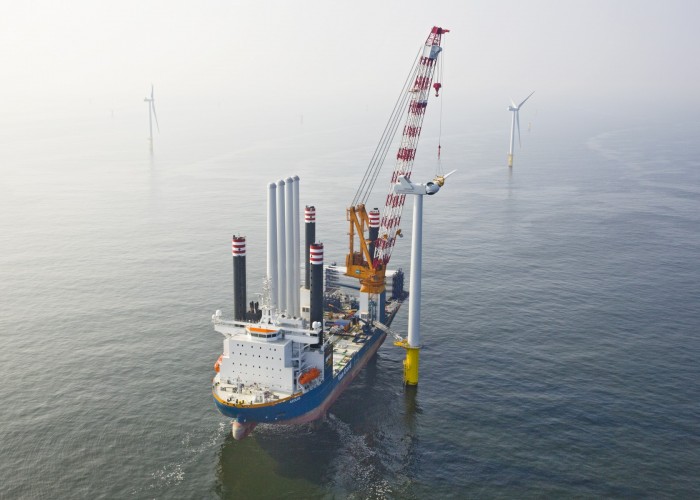
Eneco will supply simulated wind data from its Luchterduinen offshore wind farm (pictured) to support the PosHYdon project.
PosHYdon aims to integrate three energy systems in the North Sea – offshore wind, offshore gas and offshore hydrogen.
The data will be used to model the use of electricity generated by the wind farm to power the electrolysis process on the Neptune-operated Q13a platform, using sea water.
Sea water is demineralised on the platform in order to produce hydrogen.
Luchterduinen is located approximately 23km off the coast of Zandvoort and Noordwijk and about 25km north of the Q13a platform.
There will be no direct connection between the wind turbines and the platform for the pilot.
Q13a is the first fully electrified platform in the Dutch North Sea, located approximately 13km off the coast of Scheveningen.
PosHYdon is an initiative of Nexstep, the Dutch association for decommissioning and reuse, and TNO, the Netherlands organisation for applied scientific research.
Eneco is the latest partner to join the pilot, which also includes Gasunie, Noordgastransport and NOGAT.
Partners in the Q13a-A platform are EBN (40%) and TAQA Offshore (10%).
Neptune Energy managing director in the Netherlands Lex de Groot said: “We are very pleased to welcome Eneco onboard as a partner.
“Their participation will provide realistic data for the pilot, which in turn delivers better insights for the next stages of the project.
“The goal is to obtain valuable lessons for successfully integrating offshore energy systems to support the acceleration of the energy transition, and the Dutch North Sea is ideally suited for this.
“The ability to convert energy from wind farms to hydrogen, then transport it via the existing gas infrastructure offers major advantages, particularly for those wind farms located much further offshore.”
Eneco offshore wind director Ruben Dijkstra said: “Hydrogen is important for achieving the climate objectives to support sectors such as industry, the built environment and transport in their sustainability.
“With the possibilities of offshore wind and the enormous potential that the North Sea still offers, hydrogen production in the North Sea is an important element in the energy transition.
“Eneco gladly supports the steps being taken in this direction with the PosHYdon pilot.
“In addition to the technical aspect of offshore electrolysis, Eneco also has a strong interest in developing green hydrogen certificates and adding hydrogen to the natural gas network.”