


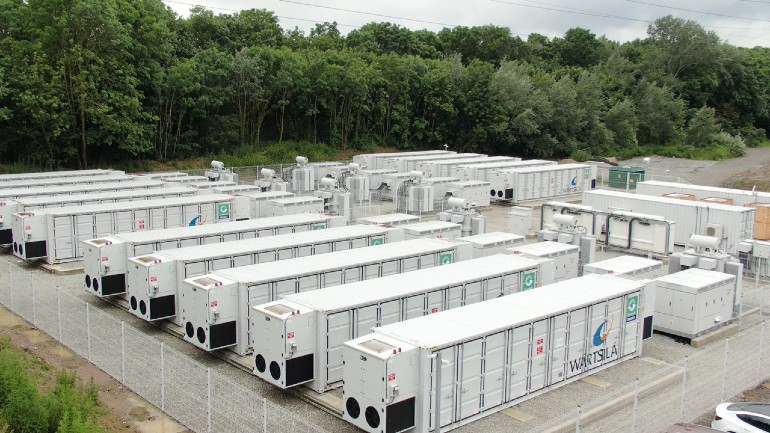
EDF Renewables UK has secured planning approval for three new grid-scale battery sites in Kent, Norwich and Essex which will support the transition to a decarbonised electricity system and accelerate the UK’s net zero ambitions.
The 50MW/100MWh lithium-ion battery storage facility near Sellindge, Kent, is the latest project to receive planning approval.
This investment from EDF Renewables UK will support Kent with its ambitions of becoming a net zero county by 2050 to help tackle the climate crisis.
The 114MW/228 MWh lithium-ion battery storage facility in Swainsthorpe, Norwich, was consented at the end of August 2023.
As well as supporting Norwich City Council’s commitment to achieve carbon neutrality by 2050, EDF Renewables UK will also improve biodiversity in the area by planting trees, new hedgerows and enhancing the existing pond on site.
The 57MW/114MWh lithium-ion battery storage facility in Braintree, Essex, is expected to begin construction in early 2024, with the aim of being connected to National Grid’s Braintree substation in 2025.
Once constructed, EDF Renewables UK will install a private wire for electric vehicle (EV) charging to futureproof the system for rapid charging hubs in the region.
These developments mark a significant milestone and continued momentum in the company’s plans to deploy cutting-edge battery storage facilities in 40 strategic locations nationwide.
Currently, EDF Renewables UK has two 50MW battery storage facilities operational in Kemsley and Oxford, with two more sites now under construction in the West Midlands.
In total, EDF Renewables UK plans to deliver up to 2GW of transmission-connected battery storage and high-volume power connections through its nationwide rollout of Energy Superhubs.
These Energy Superhubs will combine transmission-connected batteries and power infrastructure for EV charging, enabling more renewables and accelerating the decarbonisation of transport in the UK.
The Braintree and Norwich battery storage sites are also confirmed to be co-located with nearby solar projects, while a decision for co-location in Sellindge is expected later this year.
If consented, all three projects will leverage the coupling of renewable sources with battery storage systems to help stabilise the UK energy grid and maximise the efficiency of the company’s renewable generation projects.
Head of storage at EDF Renewables UK Simone Sullivan said: “The approval of our Sellindge, Norwich and Braintree battery storage facilities is an active proofpoint for the growing momentum behind crucial flexibility technologies to manage the intermittency of renewables across the UK.
“We are taking an important step towards creating a smarter and more resilient electricity system that will enable the massive transition to renewables that we need as we look to tackle the climate crisis.
“What we’re also doing is not only providing the battery technology needed to improve grid flexibility but also co-locating it near our planned solar farms – breaking new ground to ensure a zero-carbon energy system for these regions.”
EDF Renewables UK remains committed to working closely with local communities, stakeholders, and environmental experts to ensure that these battery storage facilities are developed in an environmentally responsible manner, adhering to the highest standards of safety and sustainability.