


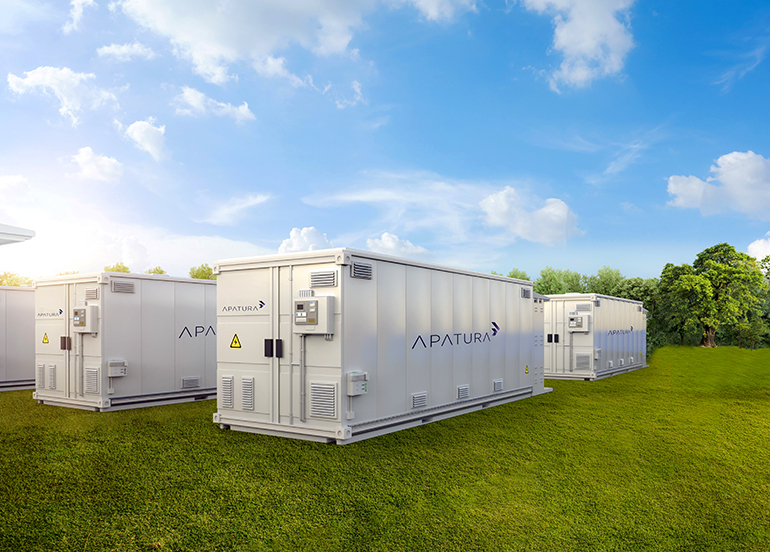
Renewable energy storage specialist Apatura has secured planning permission for its 700MW Auchentiber Battery Energy Storage System (BESS) in Port Glasgow, Inverclyde, Scotland.
The company said it is the largest planning consent for a standalone BESS in Scotland to date and the biggest ever secured by Apatura, marking a significant milestone in its mission to deliver sustainable energy solutions that fast-track the path to net zero.
It is also the fourth consent for the company in less than 12 months, and Apatura said it expects more to follow soon.
“We are delighted that ministers have supported this critically important scheme and the local Council – Inverclyde – lodged no objections,” said Apatura chief development officer Andrew Philpott.
He added: “Our focus on Scotland is central to our vision to harness its renewable energy potential. This latest planning consent is not only the largest consent for a stand-alone battery scheme in Scotland, but it also positions us at the forefront of delivering resilient energy infrastructure. This is also a central goal of the NGESO Beyond 2023 report which highlighted the vital role of BESS in Scotland.”
Auchentiber will comprise a battery electricity storage facility and associated infrastructure and the planting of new native species trees to improve biodiversity, was approved by the Energy Consents Unit on 11 September 2024.
Apatura said the BESS will make a substantial contribution to the Scottish government’s goal of generating 50% of Scotland’s overall energy consumption from renewable sources, and by 2050 to have decarbonised its energy system almost completely.
It is therefore critical to meeting the UK government’s commitment to achieving net zero as set out in the Climate Change Act 2008 (2050 Target Amendment) Order 2019, added the developer.
Apatura said it worked closely with the Energy Consents Unit and Inverclyde Council to achieve this success which will not only bring grid resilience but will also create local job opportunities and a Community Benefit Fund.
Direct employment opportunities are expected during the construction, operational and decommissioning phases, as well as indirect job creation throughout the supply chain and related services.
Philpott added: “Our BESS plays a crucial role in modern energy management, especially in the context of renewable energy integration and grid stability.
“It is central to our goal of enhancing the renewable energy infrastructure in Scotland and follows on from a number of recent successful planning consents.
“This scheme will help deliver stable energy prices, leading to reduced bills, taking the pressure off households while at the same time increasing energy security.
“We are determined to deliver reliable, clean energy to communities across the country and this latest planning consent does just that.”