Power purchaser SmartestEnergy has called on National Grid to provide longer contracts for future frequency response capacity in order to accelerate the emerging energy storage sector.
In a report entitled ‘Making the commercial case for battery storage, SmartestEnergy found the length of grid service contracts are too short to meet lender requirements.
SmartestEnergy consulted 45 battery storage players ahead of National Grid’s first Enhanced Frequency Response auction to explore the barriers they face to commercialisation.
The four-year EFR auction contracts are forcing investors and developers to look at a mix of use cases to secure a positive return on investment by installing batteries alongside existing renewable energy projects, the report said.
Almost 70% of the battery innovators indicated that the biggest revenue opportunity they were looking to employ would come from grid services such EFR contracts.
SmartestEnergy demand side management VP Robert Owens said: “It’s clear that the current EFR capacity in isolation will not be enough to unlock the full potential of batteries, so developers need to know what’s next for the projects that won’t win an EFR contract in this auction.
“National Grid needs to reassure these pioneers that there will be more revenue streams available for them in order to secure the battery capacity we need for the “smart power revolution” and decentralised energy supply.”
National Grid will announce the winners of the first 200MW EFR auction on 26 August.
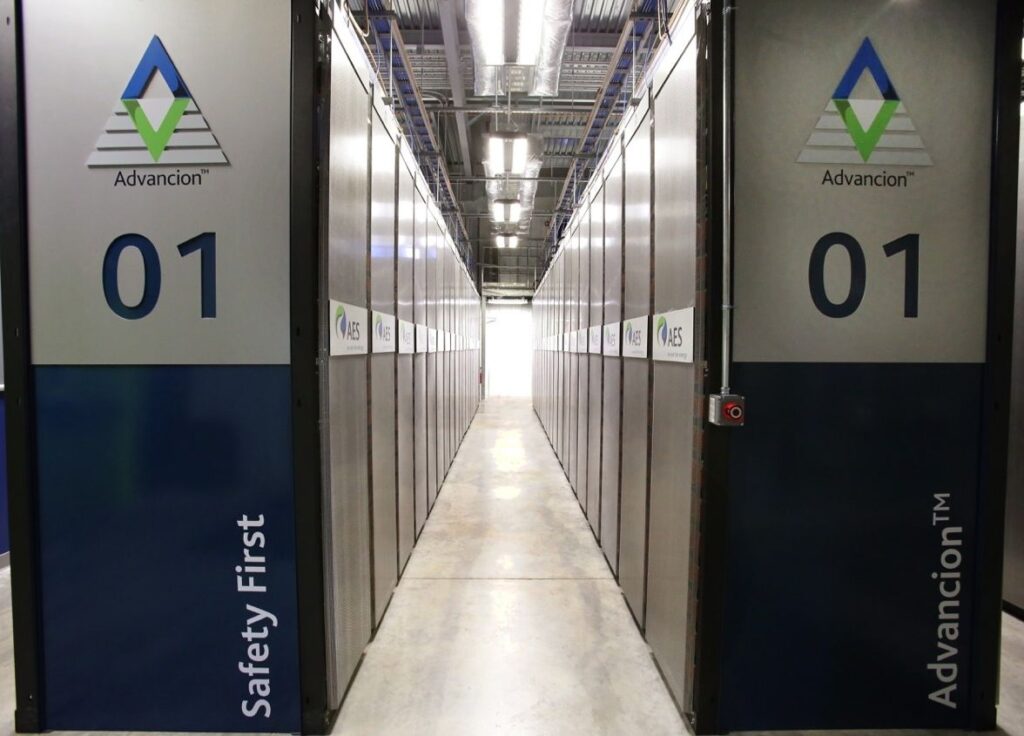
Image: Battery storage system (AES)