


Renewables operator Encavis has recorded earnings before interest, tax depreciation and amortisation (EBITDA) of €45m in first quarter results, up 42% on the same period last year.
The company’s Q1 2019 revenue rose 30% to €59.5m on Q1 2018.
Encavis attributed the positive start to the year to its portfolio expansion activities and to “favourable meteorological” conditions.
Encavis chief executive Dierk Paskert said: “Once again, we succeeded in increasing all operating earnings figures very significantly.
“The basis of this success and our sustained growth is the steady expansion of our portfolio across now 10 European countries.
“This allows us to benefit from changing meteorological conditions in different regions of Europe.”
On the basis of the company’s business performance in the first quarter, the Encavis management board says it expects to be able to further increase the financial and earnings figures for the 2019 financial year as a whole and confirms the forecast for operating earnings per share of more than €0.35.
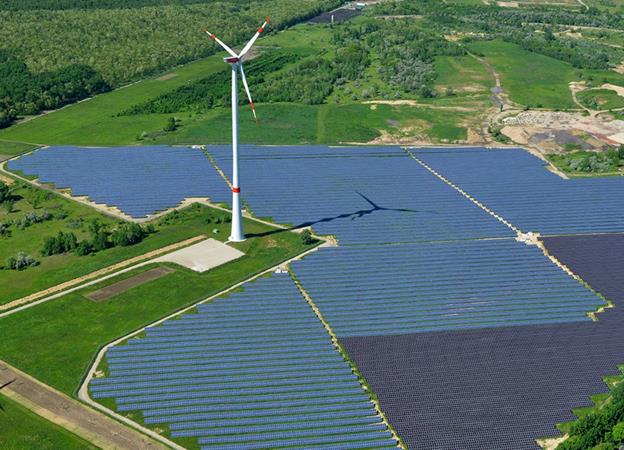
Both solar and wind farms contributed to Encavis’ revenue increase in Q1 of this year.
In particular, the company cited higher solar radiation in Italy and France, as well as an increased number of wind turbines in Denmark and Germany.
Revenue comprises feed-in of electricity into the grid, the operation of solar and wind parks for third parties and other asset management services.
The company’s EBITDA margin increased by 6.5 percentage points to 75% in Q1 2019. The operating result from operating activities (EBIT) rose by 73.6% year-on-year to €23.4m.
At the end of the reporting period, Encavis’ assets comprised a total of 175 solar parks and 69 wind parks across 10 European countries with a total generation capacity of just under 2GW.
Around 300MW of this is attributable to the acquisition of the Talayuela solar farm in Spain, which will be built on an area of around 790 hectares and is expected to be completed in the third quarter of 2020.
The deal marks Encavis’ entry into the growing market for private-sector power purchase agreements (PPAs). The output from Talayuela will be sold over a period of around 10 years to a company with a strong credit rating.
“From the first full year of operation, our Talayuela solar park will make an annual contribution to sales of around 25 million euros.
“The market for such PPAs is characterised by excellent growth prospects. This is not least due to the attractive returns that can be generated with these contractual arrangements,” said Paskert.