


Equinor’s renewable energy arm has reported continued a net loss of $676m in 2024 compared with a net loss of $757m in 2023.
The business unit’s total revenues for 2024 reached $317m compared with $17m for the previous year.
The long-term view on the importance of offshore wind “remains firm”, stated Equinor.
Through an acquisition of a 10% stake in Orsted, Equinor gained exposure to a premium portfolio of offshore wind projects and assets in operation.
In 2024, Equinor’s power generation (Equinor share) reached 2.80TWh, an increase from 1.86TWh in 2023.
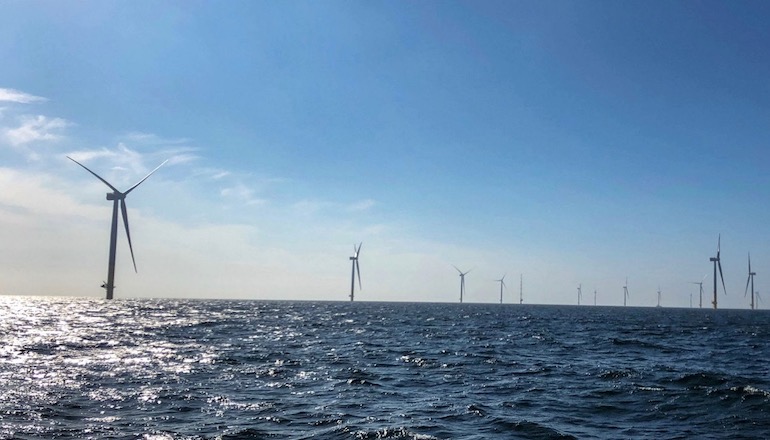
Offshore wind farms contributed 1.56TWh, with the majority coming from Dudgeon, Sheringham Shoal, and Arkona.
Onshore renewables provided an additional 1.38TWh, with the main source being the Serra da Babilonia 1 Wind Complex in Brazil.
Notably, the addition of onshore power plants in Brazil and Poland, as well as the start of production at the partner-operated Mendubim Complex of solar plants in Brazil, resulted in a significant increase in power generation for the full year of 2024 compared to 2023.
This year’s onshore production was particularly high, representing the highest total power production numbers in the company’s history.
Commercial production at the Dogger Bank A wind farm is expected to start in the second half of 2025.
In its 2025 Energy Transition Plan, also published today, Equinor stated: “We continue to see offshore wind as a significant and value-adding part of the future energy system, but the speed at which we can grow our offshore wind business will depend on access to value-creating projects and necessary framework conditions.
“We aim to have 10-12 GW of installed renewable energy capacity by 2030, and a transport and storage capacity of 30-50 million tonnes of CO2 by 2035.”