


Danish renewables developer European Energy reported a profit before tax of over €4m in the first quarter of 2020, down from more than €20m in the same period in 2019.
Gross profit for the first three months of this year reached €13.8m compared with €26m in the first quarter of last year.
The falls were due to less divestments of energy parks than the previous year, which is part of a company strategy to become partly an independent power producer by keeping more operating projects on its books.
European Energy said it is committed to deliver both earnings before interest, tax, depreciation and amortisation (EBITDA) of €52-58m and profit before tax of €35-39m for the full financial year in 2020, in line with an earlier guideline.
The sale of electricity increased by 58% to €15.4m in the first quarter of 2020, compared with €9.7m in the first quarter of 2019, due to favourable weather conditions in European Energy’s main markets, said the company.
Production from solar and wind increased 92% in the first quarter of 2020 compared to last year, due to changes in the portfolio.
Chief executive Knud Andersen said: “I am satisfied that we have been able to stay on the course and maintain stability in our business during uncertain times.
“We have managed to expand our development pipeline to a total of +15GW and continue our ongoing construction activities in Denmark, Poland, Germany, Italy and Brazil, only with minor delays.
“I am certain that we will continue to see a demand for the cleanest, cheapest and the most scalable solutions for energy production. We can deliver that.”
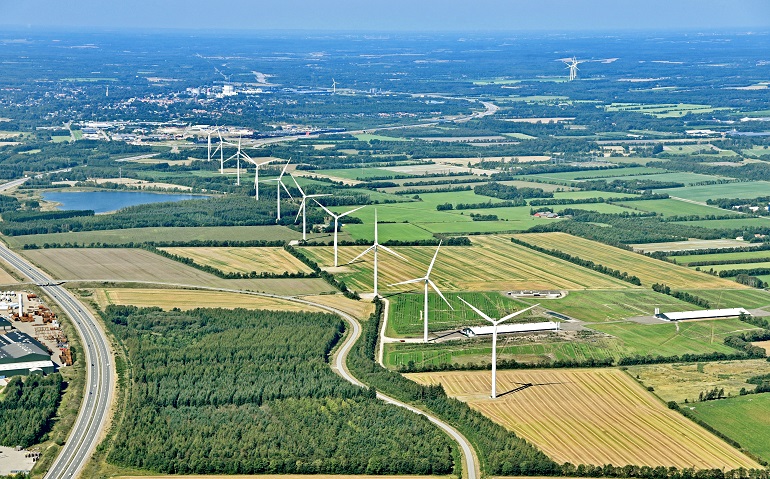
During the first quarter of 2020, European Energy closed the divestment of three turbines at the Svindbaek wind farm in Denmark with Aquila European Renewables Income Fund, a London-listed investment company advised by Aquila Capital Investment.
European Energy’s divestments in the quarter totalled €12.3m.
In Brazil, Covid-19 and a polarised political environment negatively affected the value of the Brazilian currency, impacting European Energy’s projects in Coremas, which resulted in an impairment of €4.4m.
The developer has increased equity to €141.3m.
European Energy stated it anticipates another year of “good results”.
“However, the risk factors associated with developing and constructing solar and wind projects may cause delays,” it stated.
Typical risk factors include potential delay in deliveries from external suppliers, abnormal weather conditions during the construction period and co-developers’ performance and skills in handling construction projects.