


Bord na Móna has reported a record operating profit of €95m for the financial year 2023 (FY22 €79m).
It said the results are the outcome of strong performance across most areas of the business but driven particularly by Bord na Móna’s renewable energy portfolio which grew by 35% in FY23 versus the previous year.
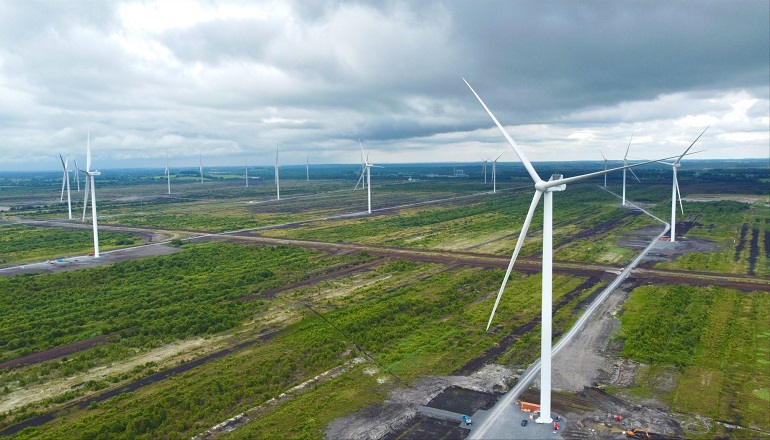
The Cloncreen and Oweninny Wind Farms (both RESS 1 projects) collectively delivered an additional 175MW of capacity in the past 12 months.
EBITDA, including contributions from joint ventures, was €139m in FY23, up from €121m the previous year.
In recognition of the extraordinary energy market conditions which prevailed in FY23, Bord na Móna has declared a one-off enhanced dividend of €37.8m, representing 37.5% of adjusted profit after tax.
It invested €100m in the expansion of its renewable energy portfolio, including wholly owned developments as well as joint venture projects.
Wind energy milestones included the construction of Cloncreen and Oweninny Wind Farms, plus commencement of work at Derrinlough Wind Farm, representing an overall investment of €250m.
Bord na Móna also launched a joint venture with Ocean Winds to develop its first offshore wind farms around the coast of Ireland.
The joint venture aims to generate up to 2.3GW of renewable electricity.
In FY23, Bord na Móna contributed €930,000 in local community scheme funding, bringing the total support provided over the past six years to over €4.45m.
It has also advanced its hydrogen-ready and solar operations this year.
The company has secured planning permission to launch a 2MW pilot-scale hydrogen electrolysis plant at Mount Lucas, Offaly.
Company chief executive Tom Donnellan said: “The financial performance achieved by Bord na Móna over the past 12 months places the company in a strong position to invest further in the expansion of our renewable energy and climate solutions portfolio.
“Our year-on-year growth also establishes a solid financial platform for the company to deliver on our 10-year plan and support the state in achieving its renewable energy requirements by 2030 and longer-term objective of carbon neutrality by 2050.”