


EnBW reported a 67% rise in adjusted earnings before interest, tax, depreciation and amortisation (EBITDA) for its renewable energy segment in 2020 to €836m, compared with 2019.
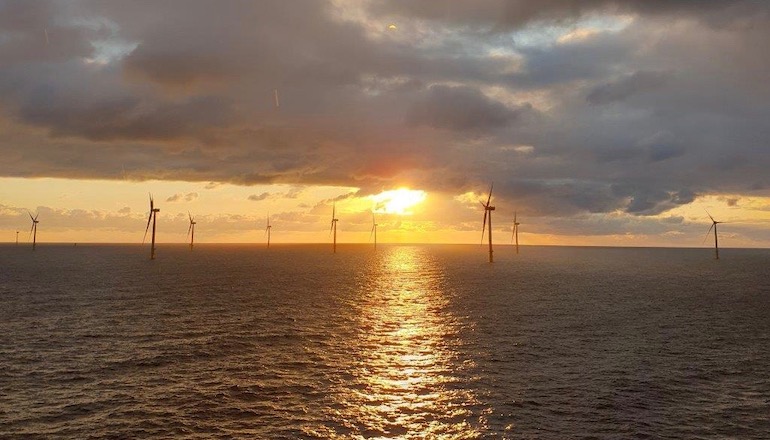
The energy company said the improvement is largely due to the earnings contributions from the two offshore wind farms, EnBW Hohe See and EnBW Albatros.
Better wind conditions for onshore wind farms in Germany and the French subsidiary Valeco additionally contributed to the positive earnings performance, said EnBW.
Electricity generated by the company’s run-of-river power plants was also sold on the forward market at higher wholesale prices than in the previous year.
EnBW chief executive Frank Mastiaux said: “After years of transformation, EnBW is repositioned. Thanks to the ongoing efforts of the entire team over the past eight years, we now have a portfolio that is consistently aligned with the needs of the energy transition.
“We have now an organisation that is also prepared for challenges and opportunities of the coming years.”
He said the company is making good progress both in its established business fields, for example in the expansion of renewable energy, and in new business fields, such as e-mobility or telecommunications.
The EnBW 2025 strategy has set a “clear course for the future”, said Mastiaux.
“We aim to earn over €3bn in 2025 and to achieve that we plan to invest €12bn – mainly in further expanding renewables, the broadband and grids business, but also in new business areas such as e-mobility, telecommunication and sustainable urban development.”
He referred to the company recently winning the auction for two large offshore wind sites in the Irish Sea, with BP, where the partners plan to jointly develop two offshore wind farms with a combined capacity of 3GW to be brought into operation from 2028 onwards.