


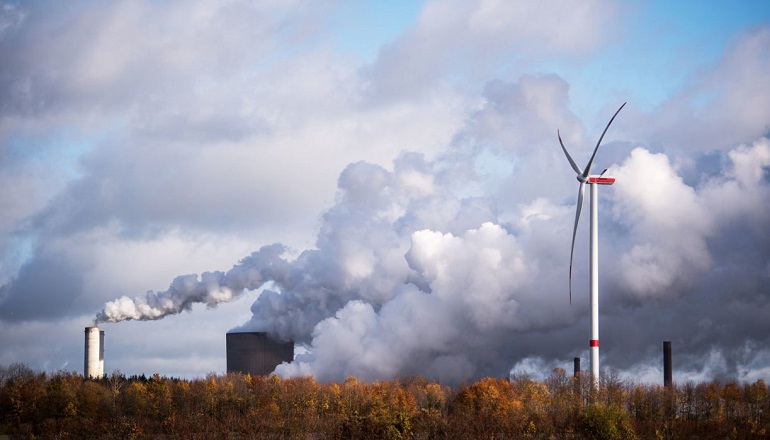
The world is “nowhere near the necessary paradigm shift” towards a clean, healthier and more equitable energy future, according to REN21’s Renewables 2021 Global Status Report.
The share of fossil fuels in the total energy mix is as high as a decade ago (80.3% versus 80.2% today) and the renewable energy share only increased slightly, the report highlighted.
Even with the historic decline in energy consumption in 2020 due to Covid-19, the five G20 countries with 2020 renewable energy targets “struggled toward” their goals, while the other 15 did not even have one.
“We are waking up to the bitter reality that the climate policy promises over the past ten years have mostly been empty words. The share of fossil fuels in final energy consumption has not moved by an inch,” said REN21 executive director Rana Adib.
“Phasing them out and making renewables the new norm are the strongest actions we can take.”
Fossil fuels are responsible for climate change, and also heavily contribute to biodiversity loss and pollution, the report stated and shifting from fossil fuels to renewable energy is a “necessary step” to take and “making renewables the norm” is not a question of technology or costs.
Today, almost all new power capacity is renewable and more than 256GW was added globally in 2020, surpassing the previous record by nearly 30%.
In more and more regions, including parts of China, the EU, India and the United States it is now cheaper to build new wind or solar PV plants than to operate existing coal-fired power plants.
“The renewable energy transition is gaining pace because it makes business sense as well as environmental sense.
“Renewable electricity is already creating millions of jobs, saving businesses money, and providing energy access to millions. But businesses and governments need to go faster, not only for the environment, but to remain competitive in a renewably powered 21st century economy,” said Sam Kimmins, head of RE100.
The report said recovery packages “continue to pour money into the brown economy” despite advantages of renewables.
The report noted there has been a wave of stronger commitments to action on the climate crisis in 2020, including net zero carbon emissions targets by China, Japan and South Korea.
Together with announcements of funding for a green economic recovery, taking public spending to levels higher than the Marshall Plan after World War 2, this should have made 2020 the year when the world “pushed the reset button” for the global climate economy and renewables.
The report stated: “But instead of driving transformation, recovery packages provide six times more investment to fossil fuels than to renewable energy.”
The report suggested making renewable energy a key performance indicator for all economic activities.
Adib added: “Governments must not only support renewables but also rapidly decommission fossil fuel capacity.
“A good way to accelerate development is to make the uptake of renewable energy a key performance indicator for every economic activity, every budget and every single public purchase.
“Thus, every ministry should have short- and long-term targets and plans to shift to renewable energy coupled with clear end-dates for fossil fuels.”