


Global carbon dioxide emissions plateaued in 2019, defying expectations of a rise, according to International Energy Agency (IEA) data.
After two years of growth, global CO2 emissions were unchanged at 33 gigatonnes in 2019, even as the world economy expanded by 2.9%, IEA found.
The main reason was declining emissions from electricity generation in advanced economies, which the IEA accredited to the “expanding role” of renewables, mainly wind and solar, fuel switching from coal to natural gas, and higher nuclear power generation.
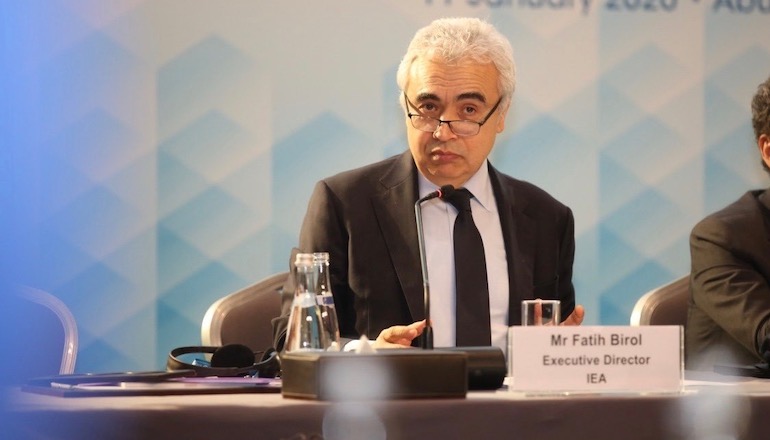
IEA director Fatih Birol said: “This welcome halt in emissions growth is grounds for optimism that we can tackle the climate challenge this decade.
“It is evidence that clean energy transitions are underway – and it’s also a signal that we have the opportunity to meaningfully move the needle on emissions through more ambitious policies and investments.”
The IEA study found the US recorded the largest emissions decline on a country basis, with a fall of 140 million tonnes, or 2.9%.
US emissions are now down by almost 1 gigatonne from a peak in 2000.
Emissions in the EU fell by 160 million tonnes, or 5%, in 2019 driven by reductions in the power sector.
Natural gas produced more electricity than coal for the first time ever, while wind-powered electricity nearly caught up with coal-fired electricity.
Japan’s emissions fell by 45 million tonnes, or around 4%, the fastest pace of decline since 2009, as output from recently restarted nuclear reactors increased.
Emissions in the rest of the world grew by close to 400 million tonnes in 2019, with almost 80% of the increase coming from countries in Asia where coal-fired power generation continued to rise.
Across advanced economies, emissions from the power sector declined to levels last seen in the late 1980s, when electricity demand was one-third lower than today.
Coal-fired power generation in advanced economies declined by nearly 15% as a result of growth in renewables, coal-to-gas switching, a rise in nuclear power and weaker electricity demand.
Birol added: “We now need to work hard to make sure that 2019 is remembered as a definitive peak in global emissions, not just another pause in growth.
“We have the energy technologies to do this, and we have to make use of them all. The IEA is building a grand coalition focused on reducing emissions – encompassing governments, companies, investors and everyone with a genuine commitment to tackling our climate challenge.”
The IEA will publish a World Energy Outlook Special Report in June that will map out how to cut global energy-related carbon emissions by one-third by 2030 and put the world “on track” for longer-term climate goals.