


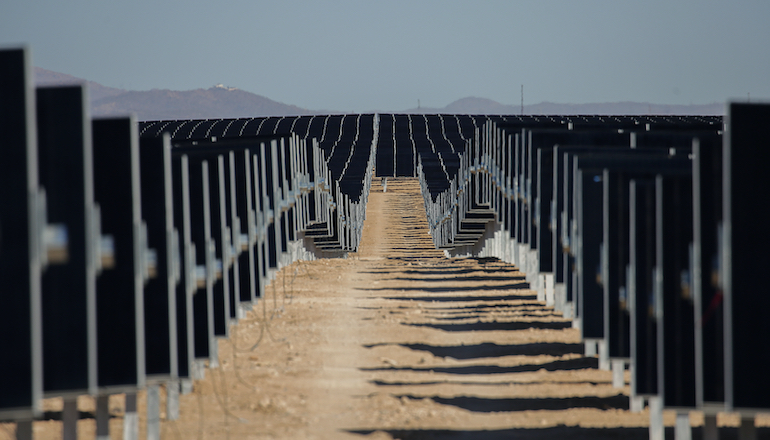
Global investment in clean energy is on course to rise to nearly $2tn in 2023, with solar set to eclipse oil production for the first time.
A new report from the IEA estimates that out of $2.8tn expected to be invested globally in energy this year, more than $1.7tn is expected to go to clean technologies, including renewables, electric vehicles, nuclear power, grids, storage, low-emissions fuels, efficiency improvements and heat pumps.
According to the IEA’s latest World Energy Investment report, the remainder, slightly more than $1tn is going to coal, gas and oil.
IEA Executive Director Fatih Birol said: “Clean energy is moving fast – faster than many people realise.
“This is clear in the investment trends, where clean technologies are pulling away from fossil fuels.
“For every dollar invested in fossil fuels, about 1.7 dollars are now going into clean energy.
“Five years ago, this ratio was one-to-one.
“One shining example is investment in solar, which is set to overtake the amount of investment going into oil production for the first time.”
Led by solar, low-emissions electricity technologies are expected to account for almost 90% of investment in power generation.
Commenting on IEA’s report, Ember’s head of data insights, Dave Jones, said: “This crowns solar as a true energy superpower.
“It is emerging as the biggest tool we have for rapid decarbonisation of the entire economy, especially as solar is increasingly used to power cars in place of oil.
“The irony remains that some of the sunniest places in the world have the lowest levels of solar investment, and this is a problem that needs attention.”
Annual clean energy investment is expected to rise by 24% between 2021 and 2023, driven by renewables and electric vehicles, compared with a 15% rise in fossil fuel investment over the same period, according to IEA’s report.
But more than 90% of this increase comes from advanced economies and China, presenting a serious risk of new dividing lines in global energy if clean energy transitions don’t pick up elsewhere.
Clean energy investments have been boosted by a variety of factors in recent years, including periods of strong economic growth and volatile fossil fuel prices that raised concerns about energy security, especially following Russia’s invasion of Ukraine.
Enhanced policy support through major actions like the US Inflation Reduction Act and initiatives in Europe, Japan, China and elsewhere have also played a role.
Spending on upstream oil and gas is expected to rise by 7% in 2023, taking it back to 2019 levels. The few oil companies that are investing more than before the Covid-19 pandemic are mostly large national oil companies in the Middle East.
Many fossil fuel producers made record profits last year because of higher fuel prices, but the majority of this cash flow has gone to dividends, share buybacks and debt repayment – rather than back into traditional supply.
Nonetheless, the expected rebound in fossil fuel investment means it is set to rise in 2023 to more than double the levels needed in 2030 in the IEA’s Net Zero Emissions by 2050 Scenario.
The oil and gas industry’s capital spending on low-emissions alternatives such as clean electricity, clean fuels and carbon capture technologies was less than 5% of its upstream spending in 2022. That level was little changed from last year – though the share is higher for some of the larger European companies.
The biggest shortfalls in clean energy investment are in emerging and developing economies.
There are some bright spots, such as dynamic investments in solar in India and in renewables in Brazil and parts of the Middle East.