


Global investment in renewable energy reached a record high in 2022, according to a new report from IRENA and the Climate Policy Initiative.
Across the world US$0.5 trillion was invested in the industry, according to Global Landscape of Renewable Energy Finance 2023.
However, the report states that this still represents less than 40% of the average investment needed each year between 2021 and 2030, according to IRENA’s 1.5°C Scenario.
Investments are also not on track to achieve the goals set by the 2030 Agenda for Sustainable Development.
Since decentralised solutions are vital in plugging the access gap to reach universal energy access to improve livelihoods and welfare under the 2030 Agenda, efforts must be made to scale up investments in the off-grid renewables sector, the report said.
Furthermore, investment in off-grid renewable solutions falls far short of the US$2.3bn needed annually in the sector between 2021 and 2030, it added.
Investments have become concentrated in specific technologies and uses.
In 2020, solar photovoltaic alone attracted 43% of the total investment in renewables, followed by onshore and offshore wind at 35% and 12% shares, respectively.
Based on preliminary figures, this concentration seems to have continued to the year of 2022.
To best support the energy transition, more funds need to flow to less mature technologies as well as to other sectors beyond electricity such as heating, cooling, and system integration, according to the report.
Comparing renewables financing across countries and regions, the report shows that glaring disparities have increased significantly over the last six years.
About 70% of the world’s population, mostly residing in developing and emerging countries, received only 15% of global investments in 2020.
Sub-Saharan Africa for example, received less than 1.5% of the amount invested globally between 2000 and 2020.
In 2021, investment per capita in Europe was 127 times that in Sub-Saharan Africa, and 179 times more in North America.
The report emphasises how lending to developing countries looking to deploy renewables must be reformed, and highlights the need for public financing to play a much stronger role, beyond mitigating investment risks.
Recognising the limited public funds available in the developing world, the report calls for stronger international collaboration, including a substantial increase in financial flows from the Global North to the Global South.
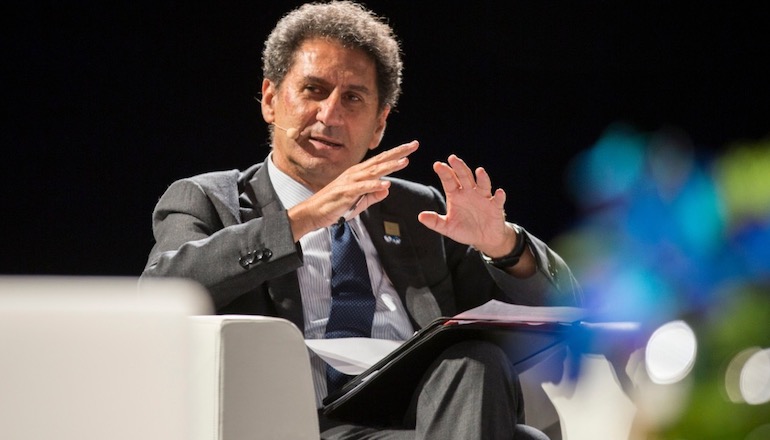
IRENA director-general Francesco La Camera (pictured) said: “For the energy transition to improve lives and livelihoods, governments and development partners need to ensure a more equitable flow of finance, by recognising the different contexts and needs.
“This joint report underscores the need to direct public funds to regions and countries with a lot of untapped renewables potential but find it difficult to attract investment.
“International cooperation must aim at directing these funds to enabling policy frameworks, the development of energy transition infrastructure, and to address persistent socio-economic gaps.”