


Governments’ spending on clean energy amounts to just 3% of what has been mobilised to bolster countries’ economies following the Covid-19 pandemic, according to the International Energy Agency (IEA).
The share of $16.9 trillion (€14.6 trillion) is up from around 2% in July, but still leaves global carbon dioxide (CO2) emissions on an upward trajectory, with this year set to be the second largest annual increase in history.
Governments have increased the amount of their economic recovery spending that is going towards clean energy investments by 20% in the past three months, new estimates from the IEA’s Sustainable Recovery Tracker show.
But the spending is highly imbalanced geographically – with most of it taking place in advanced economies rather than the developing world – and still falls short of what is needed to put global CO2 emissions into sustained decline.
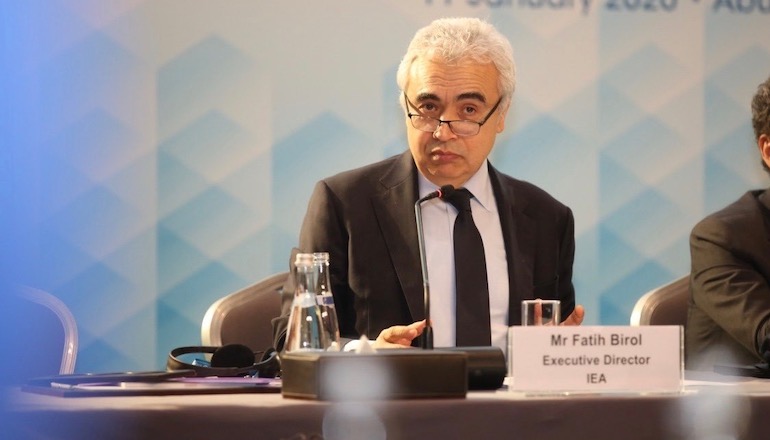
IEA executive director Fatih Birol (pictured) said: “We are witnessing an uneven and unsustainable recovery from last year’s economic crisis – a recovery that consists of huge growth in fossil fuel consumption while leaving behind nearly 80% of the world’s population in the shift towards a new and cleaner energy economy.
“On the eve of the G20 Leaders’ Summit and the COP26 Climate Change Conference, governments of major economies need to show they are ready to drive a massive scaling up of investments in clean energy globally and steer the world onto a safer path.
“Failure to put their money where their mouth is could well mean failure to keep the door open to limiting global warming to 1.5 °C.”
The IEA introduced the Sustainable Recovery Tracker in July to assess how government recovery measures to date compare with the Sustainable Recovery Plan, which the Agency published last year.
The IEA Plan recommended US$1trillion of annual spending on clean energy measures worldwide over a three-year period that could put the world on track with international climate goals while boosting global economic growth and employment.
The Sustainable Recovery Tracker, which was launched as a contribution to Italy’s Presidency of the G20, will continue to be updated regularly, as requested by G20 members.
In the past three months, 40 new funding announcements have been made, and 140 previously announced spending programmes have added new details or spending.
These expand on the 800 spending policies previously covered in the Tracker.
Some advanced economies – including France, Japan, the United Kingdom and the United States – are in the process of crafting and approving new investment programmes.
This could put advanced economies within reach of their share of the Sustainable Recovery Plan, assuming government support quickly reaches viable projects amid supply chain disruptions and market turbulence.
However, emerging and developing economies – where the majority of clean energy investments need to occur in the next decade – are being left behind.
Across emerging and developing economies as a whole, spending on clean energy measures is projected to be only around 20% of the level recommended in the Sustainable Recovery Plan, with little new spending in the pipeline due to tightening fiscal constraints as a result of the pandemic.
India stands out as an exception with its announcement of potentially substantial new spending through the Gati Shakti infrastructure plan, which could include new provisions for clean energy investments.
Birol said: “The shortfall in sustainable recovery spending in emerging and developing economies is a global problem that requires a global solution.
“These countries don’t have the luxury of cheap financing that many advanced economies enjoy.
“The world urgently needs to come up with bold measures to mobilise and channel clean energy investment to emerging and developing economies on a major scale.
“This is where it is needed most and has the biggest bang for its buck in tackling emissions.”