


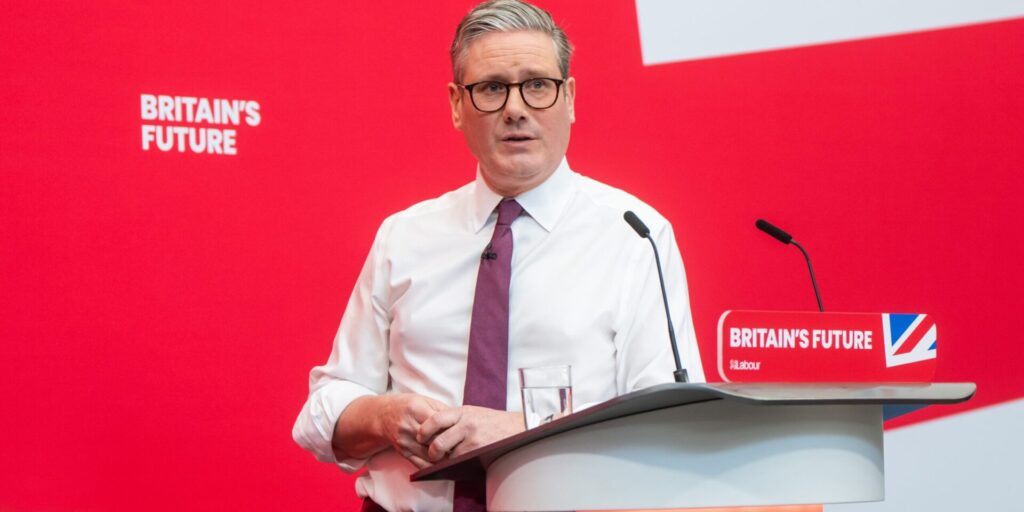
Leader of the Labour Party Sir Keir Starmer is to warn of the national security threat to Britain that comes with the continued dependence on energy from rogue foreign states, saying that with Labour, Britain will close the door on overseas fossil fuel dependency.
Starmer has cautioned “energy policy is now a matter of national security” and “Rishi Sunak’s political collapse on energy security risks leaving Britain over a barrel”.
In a call to action to voters, he will say that time’s up on the political weakness which “opens our front door to Putin”, arguing that “heating our homes should not mean we accept dependence on Russia”.
It comes as new Labour analysis – based on Office for Budget Responsibility data – reveals the cost of five more years of Conservative government could leave UK taxpayers footing a bill as big as £68bn, if the UK remains dependent on international energy markets.
This would amount to a repeat of the £940 annual spike in energy bills that occurred under the Conservatives, Labour said.
OBR analysis also found repeated crises would add hundreds of billions to debt by 2050, it added.
Starmer said: “With Great British Energy, my changed Labour Party will close the door on Putin.
“Energy policy is now a matter of national security. It is a key component of our country’s resilience and capacity to weather future shocks.
“We simply cannot afford to remain as vulnerable to price spikes as we have been in the past.
“Keeping the lights on and heating our homes should not mean leaving our front door open to Russia.
“Rishi Sunak’s political collapse on energy security, which has seen him turn his back on Britain becoming a clean energy superpower, risks leaving Britain over a barrel.
“It’s time for change. Labour will create a publicly owned clean energy company to power Britain’s future energy security – taking control of our energy supply to bring down bills.”
Labour said its plans to set up Great British Energy will help to make the UK a clean energy superpower by investing in clean power that is substantially cheaper than the current energy the country imports.