


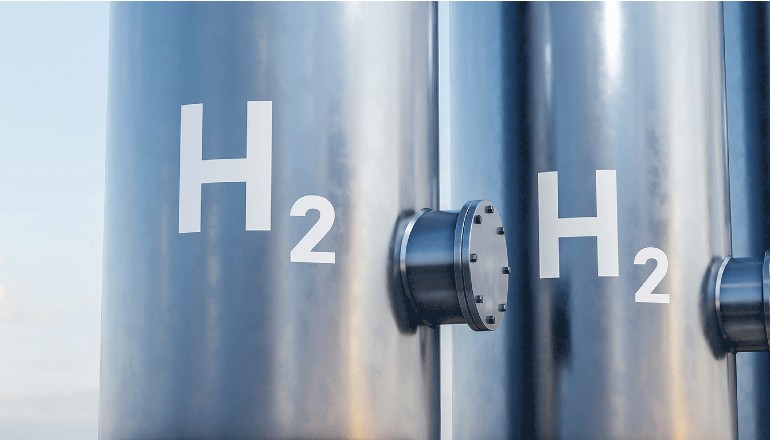
Carbon emissions associated with planned green hydrogen projects could be higher than other forms of production, depending on the electricity source according to a report by WoodMackenzie.
“The push for better measurement of efforts to cut emissions globally is shining a spotlight on the precise carbon intensity of different sources of hydrogen supply,” said principal analyst and author of the report Flor De La Cruz.
“Because of its potential to deliver almost carbon-free hydrogen, green hydrogen is generating the most industry interest, but it is important exporters and developers look more closely at the full value chain as more regulation is put in place.”
The variability of renewables means multiple electrolytic hydrogen projects are planning grid connection to maximise the utilisation of electrolysers and lower hydrogen unit costs.
However, if the availability of renewable power is limited, there is a high risk green hydrogen projects will need to connect to grids with very high carbon intensity, stated the report.
According to Wood Mackenzie’s hydrogen value chain emissions model, emissions from green hydrogen produced from 100% grid power could be as high as 50kg of CO2 equivalent per kilogram of hydrogen (kgCO2e/kgH2) – worse than brown hydrogen – if the electrolyser is connected to a grid powered by fossil fuels.
Currently, at least 30% of the 565GW electrolysis (Gwe) of announced or operational green hydrogen projects are expected to be grid connected, as shown in Wood Mackenzie’s Lens Hydrogen project tracker.
Hydrogen’s carbon intensity isn’t just limited to its production, stated the report. With more than 40% of announced project capacity targeting exports, it is important to understand its full life-cycle emissions, including processing ammonia and transportation.
“If transport is required, production emissions for hydrogen only tell part of the story, as unaccounted, often substantial, emissions occur through the rest of the value chain,” De La Cruz added.
“For example, any future trade in hydrogen between Australia and Northeast Asia or the Middle East and Europe requires hydrogen to be shipped across significant distances.”
Most developers of hydrogen export projects aim to use ammonia as the carrier. While it is the most promising carrier from a cost and a technology readiness perspective, ammonia’s total value chain emissions, including synthesis, transportation, and cracking, are significant, and could add 1kg-4.5kgCO2e/kgH2 to the carbon intensity of the final product.
Emissions from transport and processing can make a critical difference to whether hydrogen sources can meet regulatory requirements, stated the report.
Green hydrogen with 20% grid supply and blue hydrogen with 60% capture do not make the cut in the EU or Japan.
But even US blue hydrogen, with 95% capture converted to ammonia and shipped to the EU, would be at the very limit of the European carbon intensity threshold.
Green hydrogen made using 100% renewable power and converted into green ammonia would have an emissions intensity below the EU threshold, even if shipped from Australia.
But if imported hydrogen is produced using even a small amount of grid power, it could struggle to stay below EU and Japanese threshold limits.